Conflict dossier · #85 of 120
Algerian Civil War (December 1991 – 2002)
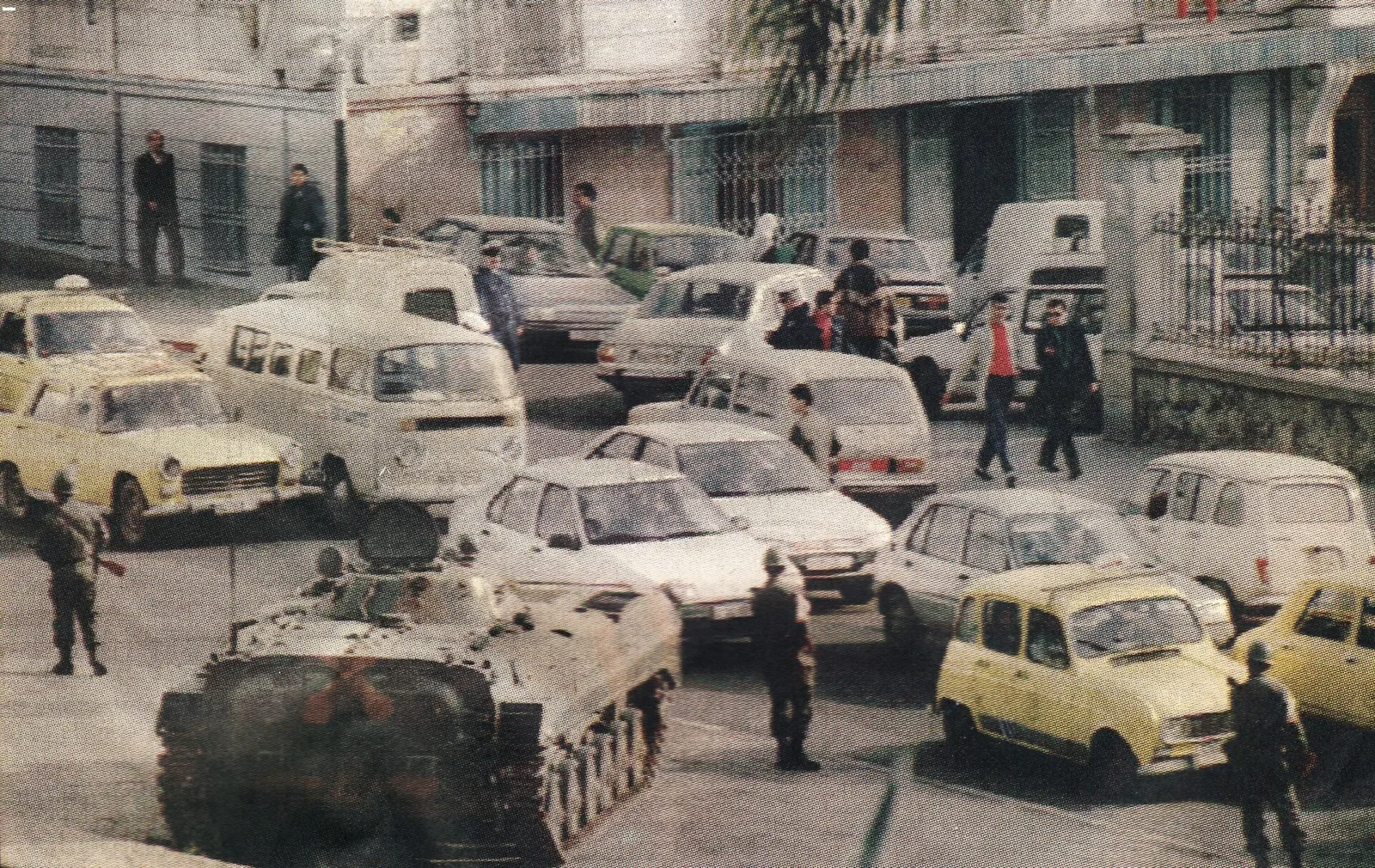
20th Century Tier 1
Algerian Civil War (December 1991 – 2002)
Overview
- Belligerents: The Algerian government and military (the "pouvoir"; presidents Chadli Bendjedid, Mohamed Boudiaf — assassinated June 1992 — Ali Kafi, Liamine Zéroual, Abdelaziz Bouteflika) vs. Islamist armed groups: the Islamic Armed Movement (MIA), the Armed Islamic Group (GIA), and the FIS-loyalist Islamic Salvation Army (AIS); later the Salafist Group for Preaching and Combat (GSPC).
- Theater: Algeria, concentrated in the Mitidja plain, Algiers, and the Atlas mountains.
- Outcome: Government victory; AIS surrendered (1997–2000) under amnesty; GIA destroyed by 2002; low-level GSPC/AQIM violence continued. Bouteflika's 1999 Civil Concord amnesty and 2005 Charter for Peace and National Reconciliation closed the conflict politically.
Causes (attributed)
- The consensus trigger: the military's cancellation of the December 1991 legislative elections after the Islamic Salvation Front (FIS) won the first round, followed by the FIS's banning and mass arrests — scholars (e.g., Luis Martinez, The Algerian Civil War 1990–1998; Hugh Roberts) agree this closed the democratic path and drove Islamists to arms, though they debate whether the FIS would have dismantled democracy itself.
- Deeper causes cited: the October 1988 riots and failed liberalization, oil-price collapse, youth unemployment, and the Afghan-war returnee ("Afghan Arab") networks that seeded the GIA.
- The "qui tue qui?" (who kills whom?) debate: journalists and defectors (e.g., Habib Souaïdia's La Sale Guerre) alleged army death squads committed some massacres attributed to the GIA; the government and many scholars reject this as unproven — responsibility for specific massacres is contested and must be attributed, never stated as fact.
Course (brief, neutral)
After the 1992 coup, guerrilla war spread from the mountains (MIA) and cities (GIA). The GIA turned to mass civilian massacres from 1993, peaking in 1997–98 (Rais, Bentalha — hundreds killed in single nights; perpetrators disputed). The AIS, rejecting civilian targeting, declared a unilateral ceasefire in 1997 and negotiated surrender. The army's counter-insurgency combined quadrillage (sector control), militias (GLD "patriots"), and special forces. Bouteflika's 1999 amnesty referendum demobilized thousands; by 2002 the GIA was destroyed, with remnants forming the GSPC.
Casualties (named sources; contested)
- Deaths: 150,000–200,000 commonly cited (Yale Review of International Studies; EPFL Wikispeedia summary of Wikipedia; strategypage.com; dyerbolical.com). Rosa-Luxemburg-Stiftung: 150,000. The Algerian government has never released official statistics (strategypage.com notes this).
- Disappeared: thousands (families' associations cite ~7,000+; exact figure UNVERIFIED).
- Displaced: ~1 million fled their homes (strategypage.com).
- Economic cost: ~$20 billion (strategypage.com).
- Working range: 150,000–200,000 dead; no official count exists.
Outcome & legacy
- The military-backed regime survived and reconsolidated; Bouteflika ruled until 2019.
- The 2005 Charter for Peace and National Reconciliation granted broad amnesty and criminalized public discussion of the war's responsibility — producing a studied official silence scholars compare to Lebanon's amnesia.
- The GSPC's 2007 alliance with al-Qaeda (AQIM) exported the conflict regionally into the Sahel.
Historiography pulse
- Academic consensus: an Islamist insurgency met by a brutal state counter-insurgency; civilians bore the overwhelming majority of deaths; the war ended through military victory plus amnesty, not reconciliation.
- Major debates: "qui tue qui?" — the extent of state involvement in massacres (Souaïdia's allegations vs. official and much scholarly rejection); whether the FIS's 1991 victory would have ended democracy; the death toll's upper bound.
- Notable works: Luis Martinez, The Algerian Civil War, 1990–1998 (2000); Hugh Roberts' essays; Benjamin Stora's work on memory; Habib Souaïdia, La Sale Guerre (2001, contested); the Tibéhirine monks case (1996) remains emblematic and disputed.
Validation tier
Tier 1 — multi-source consensus on dates, trigger (cancelled elections), belligerents, and outcome. Death toll Tier 2 (150,000–200,000 range, no official data). Massacre responsibility Tier 3 (contested — flagged).
UNVERIFIED points
- Exact death toll (no official statistics).
- Responsibility for specific 1997–98 massacres (GIA-claimed vs. alleged state involvement — attributed claims only).
- Number of disappeared.
Sources
- https://yris.yira.org/column/a-short-examination-of-the-causes-of-the-1992-algerian-civil-war/ (150,000–200,000; causes analysis)
- https://www.rosalux.de/en/news/id/46197/das-erbe-des-algerischen-buergerkrieges (150,000; amnesty analysis)
- https://dlab.epfl.ch/wikispeedia/wpcd/wp/a/Algerian_Civil_War.htm (belligerents, 150,000–200,000)
- http://www.strategypage.com/qnd/algeria/articles/20160429.aspx (no official stats; $20B cost; 1M displaced)
- https://dyerbolical.com/the-black-decade-killings-algerias-shadow-of-slaughter-and-the-struggle-for-accountability/
Images
Sources
- 150,000–200,000; causes analysis
- 150,000; amnesty analysis
- belligerents, 150,000–200,000
- no official stats; $20B cost; 1M displaced