Conflict dossier · #111 of 120
Anglophone Crisis, Cameroon (2017–present)
21st Century & Ongoing Tier 2
Anglophone Crisis, Cameroon (2017–present)
Status: ongoing armed conflict, as of the September 2026 observation window.
Overview
- Belligerents: Government of Cameroon (President Paul Biya; Cameroonian Armed Forces, gendarmerie, police). Versus: Ambazonian separatist armed groups (Interim Government of Ambazonia factions, Ambazonia Defence Forces and numerous local "general"-led militias) seeking independence for the former British Southern Cameroons (North-West and South-West regions).
- Dates: Protests began late 2016; armed separatist rebellion from 2017 (the commonly used start date). Ongoing — "nearly nine years" per June 2026 reporting.
- Theater: Cameroon's North-West and South-West (Anglophone) regions; spillover into Nigeria (refugees).
Causes (attributed)
- Separatists and Anglophone civil-society groups attribute the conflict to decades of perceived marginalization of the English-speaking minority by the Francophone-dominated central government: erosion of the federal arrangement after 1961 reunification, appointment of Francophone administrators and teachers/judges to Anglophone regions, and the violent repression of 2016–2017 protests (Reuters, 2017; AP, 2026).
- The Cameroonian government frames the separatists as "terrorists" (e.g., North-West governor's description of the January 2026 Gidado attack) and attributes the violence to secessionist extremism; it rejects the marginalization narrative as a pretext.
- Analysts note the movement's fragmentation — rival interim governments and kidnapping/extortion economies — as a driver of persistence (attributed to conflict analysts; ICG).
Course
Lawyer/teacher strikes in late 2016 were met with force; October 1, 2017 independence demonstrations saw soldiers kill at least eight protesters (Reuters). Separatists took up arms; by 2018–2019 the conflict featured military raids, separatist ambushes/IEDs, "ghost town" lockdowns, and school boycotts. Both sides have been accused of atrocities against civilians (UN, Human Rights Watch — attributed). Intensity declined from the 2018–2020 peak but never ended. International mediation (including Swiss-facilitated talks) has stalled. 2026 events: January — at least 14–15 killed in a suspected separatist attack at Mbandfung/Gidado, Ndu (AP via community leader; governor called it a "massacre" by "terrorists" — perpetrator unclaimed); March — Supreme Court annulled life sentences of the "Nera 10" separatist leaders including Sisiku Ayuk Tabe and ordered retrial; April — army claimed 14 separatists killed at Dzerem Nyam, Jakiri (social media alleged civilian deaths at a festival — contested); June — Ambazonian fighters overran the Belo gendarmerie brigade, killing two officers.
Casualties (attributed)
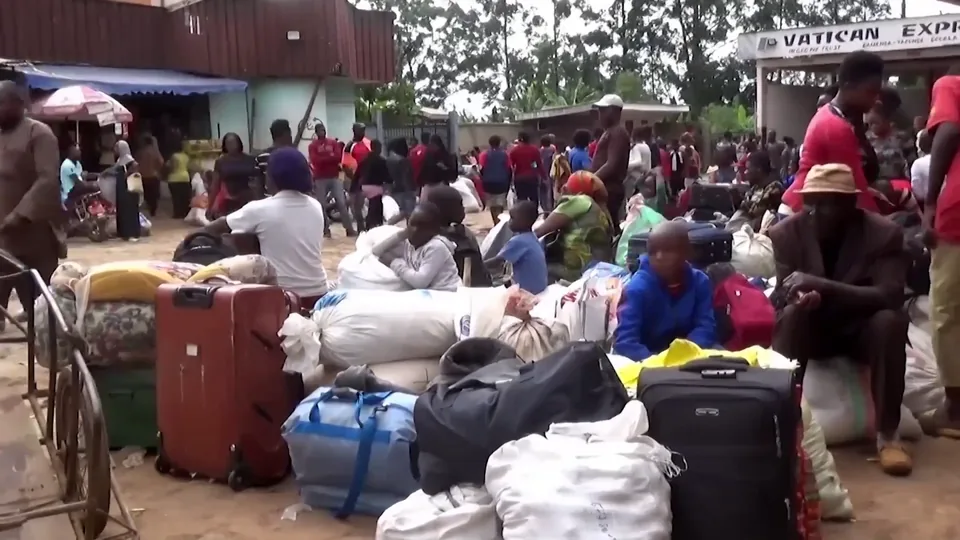
- 6,000+ killed; 600,000+ displaced — International Crisis Group, via AP (January 2026).
- Separatist attacks have decreased in recent years but the conflict "shows no sign of resolution" (AP, January 2026).
- No consolidated UCDP/ACLED total was retrieved in this pass; ICG's 6,000+ is the most-cited aggregate.
Current status (as of September 2026)
- Active low-intensity insurgency: periodic ambushes, IEDs, kidnappings for ransom, military operations; peace talks stalled with mutual bad-faith accusations (AP).
- The Nera 10 retrial ordered in March 2026 — outcome UNVERIFIED in sources consulted.
- Humanitarian: 600,000+ displaced; Anglophone regions' education and health systems severely disrupted (UN/NGO reporting — precise 2026 figures UNVERIFIED).
Tracker pulse
- ICG / CrisisWatch: primary analytical tracker; 6,000+ killed figure.
- ACLED: tracks Cameroon political violence including the Anglophone regions and Far North (Boko Haram); specific 2025–2026 fatality splits not retrieved — UNVERIFIED detail.
- UCDP: codes Cameroon with active non-state/state-based conflicts (detail not directly retrieved).
- Debate: casualty attribution (military claims of "terrorists" killed vs. allegations of civilian deaths, e.g., Dzerem Nyam April 2026); the government's "terrorist" framing vs. separatists' self-determination framing — both attributed.
Validation tier
Tier 2 — strong institutional corroboration (ICG, AP, Reuters, UN/NGO atrocity documentation) but no multi-tracker consolidated fatality figure retrieved.
UNVERIFIED points
- Consolidated death toll beyond ICG's 6,000+.
- Perpetrators of specific 2026 attacks (Gidado/Mbandfung unclaimed; Dzerem Nyam civilian-death allegations contested).
- Outcome of the Nera 10 retrial.
- Precise current displacement totals.
Sources
- http://panafricannews.blogspot.com/2026/01/community-leader-says-armed-men-kill-15.html (AP: Jan 2026 Gidado attack; ICG 6,000+ killed, 600,000+ displaced; talks stalled)
- https://www.reuters.com/article/uk-cameroon-politics-idUKKCN1C61R2/ (Reuters: Oct 2017 protests, ≥8 killed)
- https://www.cameroon-concord.com/southern-cameroons/ambazonia-rebels-kill-two-gendarmes-belo-brigade-assault (June 2026 Belo brigade attack)
- https://phoenix-browser.com/?d=3119790735812587651&g=40b3378cb897fae5fb15d05323586ca2 (Actu24 via Phoenix: April 2026 Dzerem Nyam operation; contested civilian deaths)
- https://en.wikipedia.org/wiki/Timeline_of_the_Anglophone_Crisis_(2026) (2026 timeline: Jan–Mar events, Nera 10 retrial)
Images
Sources
- AP: Jan 2026 Gidado attack; ICG 6,000+ killed, 600,000+ displaced; talks stalled
- Reuters: Oct 2017 protests, ≥8 killed
- June 2026 Belo brigade attack
- Actu24 via Phoenix: April 2026 Dzerem Nyam operation; contested civilian deaths
- 2026 timeline: Jan–Mar events, Nera 10 retrial