Conflict dossier · #68 of 120
Arab–Israeli Wars (1948–1973)
20th Century Tier 1
Arab–Israeli Wars (1948–1973)
Overview
- Belligerents: Israel vs. shifting Arab coalitions — Egypt, Syria, Jordan, Iraq, Lebanon (1948); Egypt, Syria, Jordan (1967); Egypt, Syria (1973, with expeditionary forces from other Arab states). This dossier covers the interstate wars: 1948 Arab–Israeli War (War of Independence / al-Nakba), the 1956 Sinai/Suez Crisis, the 1967 Six-Day War, the 1967–1970 War of Attrition, and the 1973 Yom Kippur War.
- Dates: 15 May 1948 – March 1949 (armistices); 29 Oct – 7 Nov 1956 (Sinai); 5–10 June 1967 (Six-Day War); 1967–1970 (War of Attrition); 6–26 October 1973 (Yom Kippur War)
- Theater: Mandatory Palestine/Israel, Sinai Peninsula, Golan Heights, West Bank, East Jerusalem, the Suez Canal zone.
Causes — attributed
- General historical consensus: the wars flowed from the unresolved conflict over Palestine — the 1947 UN Partition Plan (Resolution 181), its rejection by Arab states and Palestinian leadership, the end of the British Mandate, and Israel's declaration of independence (14 May 1948), followed by invasion by neighboring Arab armies.
- Scholars attribute each war's proximate triggers to: 1948 — the partition dispute and civil war in Mandatory Palestine (1947–48); 1956 — Nasser's nationalization of the Suez Canal and fedayeen raids, with secret Anglo-French-Israeli collusion (Sèvres Protocol); 1967 — the pre-war crisis: Egypt's closure of the Straits of Tiran, expulsion of UNEF, and Arab mobilization (the historiographic debate over whether Egypt intended war or was bluffing continues); 1973 — Egypt and Syria's attempt to recover Sinai and the Golan by force after diplomacy stalled (Anwar Sadat's stated war aims are documented; the surprise attack's intelligence failure is extensively studied).
- Academic debate: the "new historians" (Benny Morris, Avi Shlaim, Ilan Pappé) vs. traditional Israeli historiography on 1948 — particularly the causes of the Palestinian exodus (Nakba): Morris documents both expulsions and flight under wartime conditions, while Pappé argues for a planned ethnic cleansing (contested — Tier 3 on intent); Arab historiographies vs. Israeli accounts on each war's initiation.
Course
- 1948: Arab armies invaded 15 May 1948; fighting in phases with UN truces; Israel expanded beyond the partition lines; armistices with Egypt, Lebanon, Jordan, Syria (1949). ~750,000 Palestinians fled or were expelled (the Nakba — figures and causation debated; see above).
- 1956: Israel invaded Sinai (29 Oct), joined by Britain and France (Suez); US and Soviet pressure forced withdrawal; UNEF deployed.
- 1967: Israel's preemptive strike (5 June) destroyed the Egyptian Air Force on the ground; in six days Israel took Sinai, the West Bank, East Jerusalem, the Golan Heights, and Gaza.
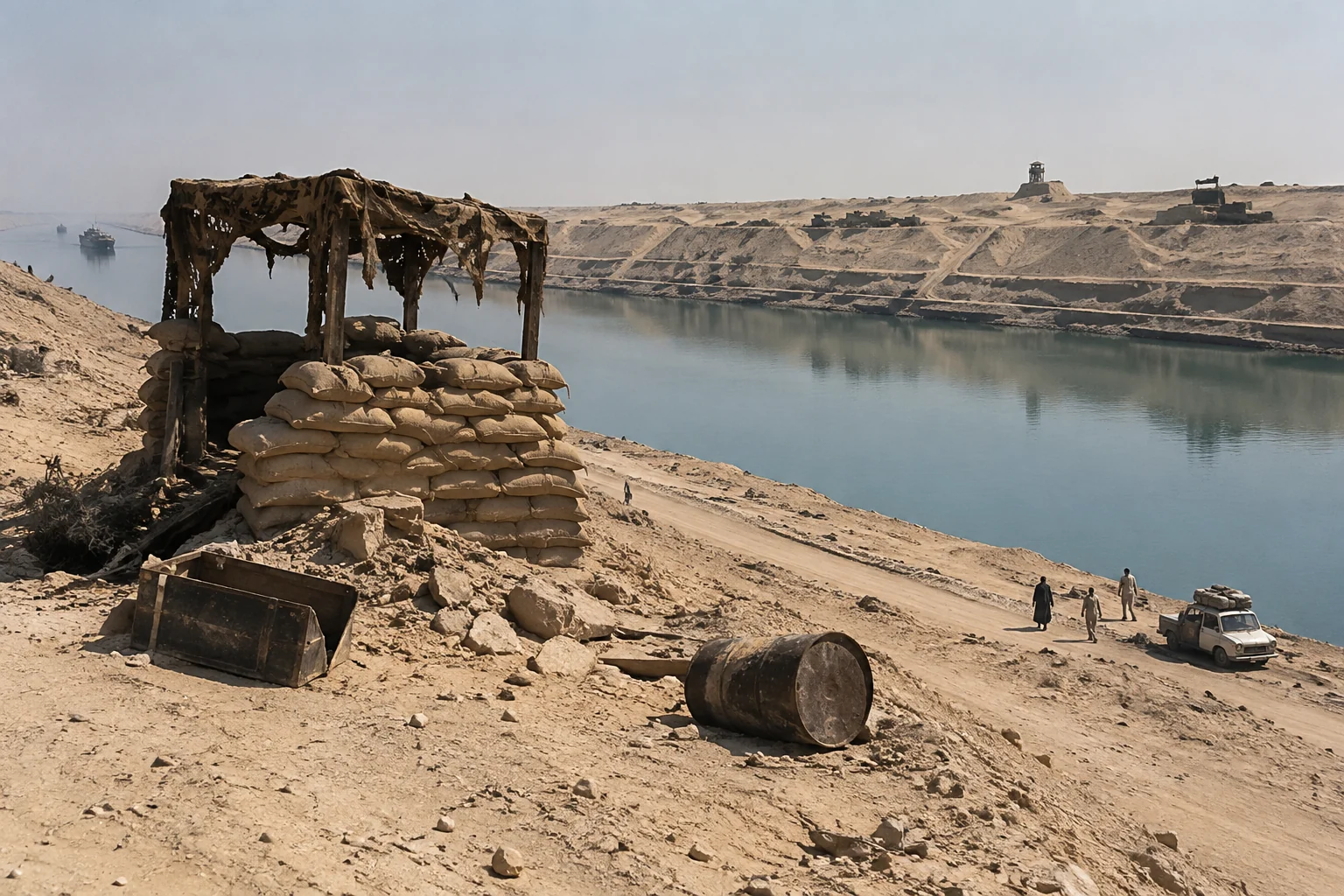
- 1967–70: War of Attrition along the Suez Canal; ended in a ceasefire with no territorial change.
- 1973: Egypt and Syria attacked on Yom Kippur (6 Oct); initial Arab gains (canal crossing, Golan advances), then Israeli counteroffensives — crossing the Suez Canal, encircling Egypt's Third Army; ceasefire 25 Oct under superpower pressure. Disengagement agreements 1974; the war led to Camp David (1978) and the Egypt–Israel peace treaty (1979).
Casualties — ranges with named sources
- 1948: Israeli: ~6,000–6,400 dead (4,000 military, 2,400 civilian per uisr.fandom.com; JVL: 6,373 killed; topwar.ru: 6,200 killed). Arab/Palestinian: Palestinian Central Bureau of Statistics estimate ~15,000 Palestinians killed in the 1948 war (Mercury News via AP); JVL: ~10,000 Arabs killed; topwar.ru: ~2,000 Arab regular troops killed plus "thousands" of irregulars. Highly contested — Tier 3.
- 1956: Israeli 172–231 killed (topwar.ru / JVL); Egyptian ~2,000–3,000 (topwar.ru); JVL: 3,000 Arabs killed.
- 1967: Israeli 776–796 dead (JVL / uisr.fandom.com). Arab: AP via Mercury News: "nearly 19,000 Egyptians, Syrians and others were estimated to have been killed"; topwar.ru: Egypt 11,500 killed, Syria 1,000; JVL: 18,300 Arabs killed.
- War of Attrition: Israeli 1,424–1,551 dead (uisr.fandom.com / JVL); Arab ~5,000 (JVL).
- 1973: Israeli 2,656–2,688 dead (uisr.fandom.com / JVL / readerslibrary.org: 2,687). Arab: readerslibrary.org (citing military histories): ~15,600 Arab dead, 35,000 wounded, 8,700 captured; AP via Mercury News: "a similar number — mostly Syrians and Egyptians" (~19,000).
- Total 1948–1973 (medium.com compilation of Wikipedia-derived figures): ~39,000 Arab fatalities in wars involving Israel 1948–1973.
Outcome & legacy
- Israel's survival and expansion in 1948; the Palestinian Nakba and the refugee question, unresolved into the 2026 window.
- 1967's occupation of the West Bank, Gaza, Sinai, and Golan reshaped the conflict's geography; UN Resolution 242 ("land for peace") became the diplomatic baseline.
- 1973's psychological shock in Israel (the Agranat Commission) and Egypt's regained honor enabled the Camp David Accords (1978) — the first Arab–Israeli peace treaty.
- The wars are among the most historiographically contested conflicts of the 20th century; each side's national narrative differs sharply (see Historiography pulse).
Historiography pulse
- Academic consensus: the interstate wars' basic facts (dates, territorial outcomes) are settled; causes and responsibility for the 1948 Palestinian exodus remain the central debate.
- Major debates: (a) the Nakba — expulsion vs. flight (Morris's documented mixed account vs. Pappé's planned-expulsion thesis vs. traditional narratives); (b) 1967's initiation — preemption vs. preventive war; (c) 1973's intelligence failure (the "concept" that Egypt wouldn't attack); (d) casualty figures — Arab losses "were never announced" (kenspiro.com) and remain estimated (Tier 3).
- Notable scholarship: Benny Morris, 1948 (2008); Avi Shlaim, The Iron Wall (2000); Michael Oren, Six Days of War (2002); Abraham Rabinovich, The Yom Kippur War (2004); documentaries include extensive Israeli and Arab state-media productions — each carrying national framing (flagged).
Validation tier
Tier 1 on dates, territorial outcomes, and Israeli casualty figures (official IDF-based); Tier 2–3 on Arab casualty figures (estimated, never officially announced); Tier 3 on 1948 exodus causation and 1948 Arab death tolls (flagged as contested).
UNVERIFIED points
- Arab military deaths in every war: estimated, never officially announced; 1948 Arab/Palestinian deaths range from ~2,000 regulars to ~15,000 Palestinians across sources.
- 1948 Palestinian exodus causation: attributed debate, no scholarly consensus on intent.
- 1967/1973 Arab death tolls: AP's ~19,000 and JVL's 18,300/15,600 are estimates.
Sources
- Jewish Virtual Library, "Total Casualties, Arab-Israeli Conflict" — https://jvl.levit.dev/total-casualties-arab-israeli-conflict
- uisr.fandom.com, "Israeli Casualties of War" (IDF-based figures) — https://uisr.fandom.com/wiki/Israeli_Casualties_of_War
- Mercury News / AP, "Deaths surpass Arab losses in wars with Israel in past 40 years" — https://edition.pagesuite.com/tribune/article_popover.aspx?guid=ff2727a7-8390-4768-af4f-006ca482dd02
- en.topwar.ru, "Casualties in the wars in the Middle East in 1948–1991" — https://en.topwar.ru/242123-poteri-v-vojnah-na-blizhnem-vostoke-v-19481991-gg.html
- readerslibrary.org, "Israel's Wars, 1947–93" (Yom Kippur figures) — https://readerslibrary.org/wp-content/uploads/Israels-Wars.pdf
- medium.com / Mikhail Poda, "List of modern conflicts in the Middle East" (aggregates) — https://medium.com/@mikhail.poda/search-for-any-list-of-modern-conflicts-in-the-middle-east-i-use-the-wikipedia-page-744b8451300b
Images
Sources
- Jewish Virtual Library, "Total Casualties, Arab-Israeli Conflict"
- uisr.fandom.com, "Israeli Casualties of War" (IDF-based figures
- Mercury News / AP, "Deaths surpass Arab losses in wars with Israel in past 40 years"
- en.topwar.ru, "Casualties in the wars in the Middle East in 1948–1991"
- readerslibrary.org, "Israel's Wars, 1947–93" (Yom Kippur figures
- medium.com / Mikhail Poda, "List of modern conflicts in the Middle East" (aggregates