Conflict dossier · #11 of 120
Gallic Wars (58–50 BCE)
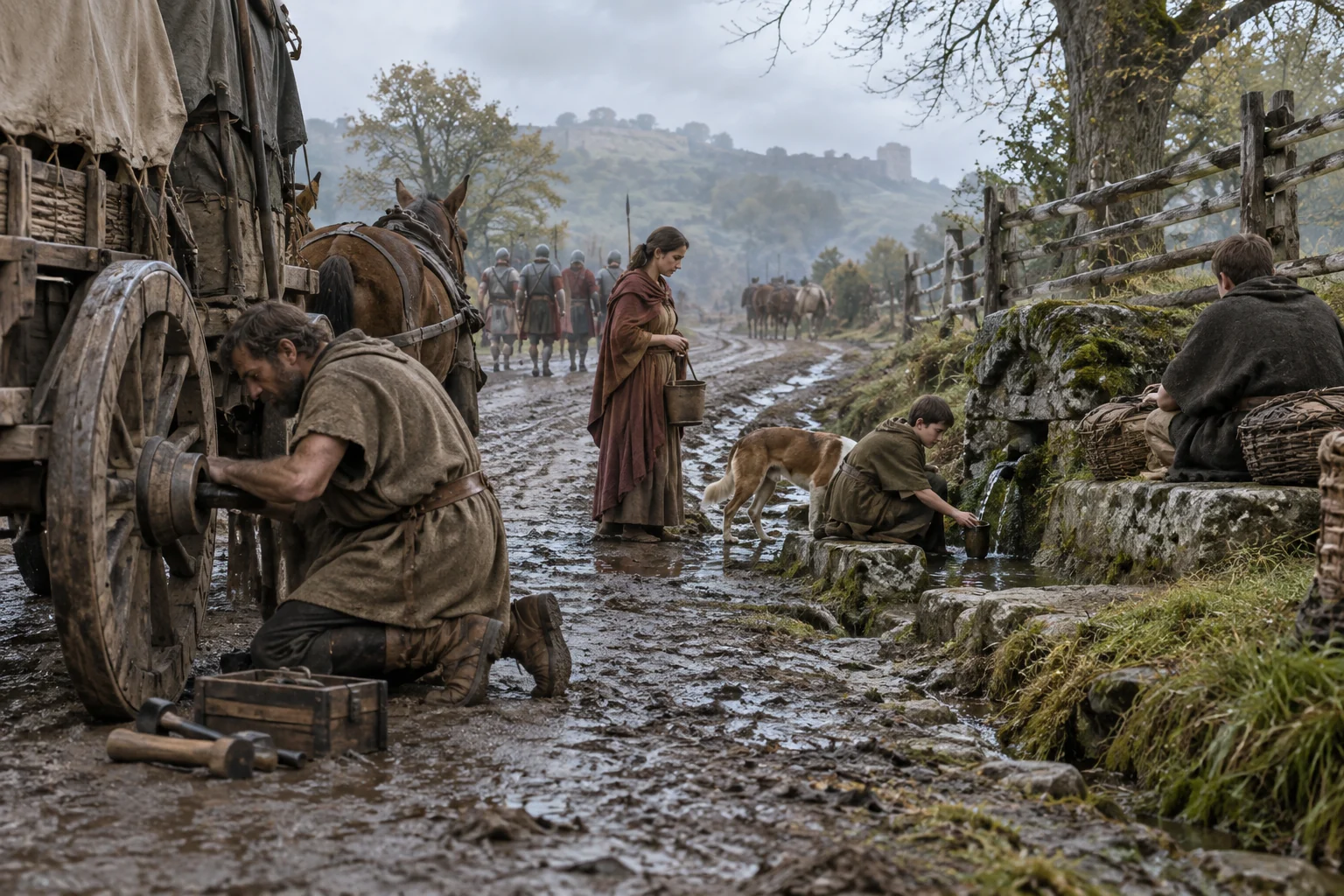
Ancient Tier 1
Gallic Wars (58–50 BCE)
Overview
- Belligerents: the Roman Republic (Julius Caesar as proconsul of Cisalpine Gaul, Transalpine Gaul, and Illyricum) vs. the Celtic tribes of Gaul — Helvetii, Belgae, Veneti, Aquitani, and the great pan-Gallic revolt under Vercingetorix of the Arverni (52 BCE) — plus Germanic groups across the Rhine and expeditions to Britain (55, 54 BCE).
- Dates: 58–50 BCE (conventionally; mop-up operations to 51).
- Theater: Gaul (modern France, Belgium, parts of Switzerland, Germany, the Netherlands), with raids into Germania and Britain.
Causes — attributed
- Caesar's own Commentarii de Bello Gallico presents the wars as defensive: the Helvetii migration (58) threatened the Roman province; subsequent campaigns responded to revolts and Germanic incursions. This is self-justifying propaganda written for a Roman audience.
- Modern scholars (e.g., Adrian Goldsworthy, Caesar; T. Rice Holmes) argue the operative causes were Caesar's need for military glory, plunder to pay his debts, and a power base to rival Pompey — an aggressive war of conquest marketed as defense. The Senate's post-war debate over whether Caesar should be handed over to the Germans for waging unauthorized war (reported by Suetonius and Plutarch) shows contemporaries saw through the pretext.
- The Helvetii migration itself is attributed by Caesar to population pressure and Germanic displacement; modern scholars treat the migration's scale as uncertain.
Course
58: Caesar blocks the Helvetii (Bibracte) and defeats the Suebi under Ariovistus. 57: conquest of the Belgae. 56: Veneti naval war. 55–54: Rhine crossings and British expeditions (limited gains). 54–53: Eburones revolt (Ambiorix destroys a legion and a half); Caesar's reprisals. 52: the great revolt — Vercingetorix unites much of Gaul; Caesar fails at Gergovia but besieges Alesia, defeating both the besieged and a massive relief army in a double circumvallation; Vercingetorix surrenders. 51–50: mop-up; Uxellodunum's defenders mutilated as a deterrent.
Casualties
- Ancient claims: Plutarch (Caesar 15) reports Caesar's own boast of 1,000,000 killed and 1,000,000 enslaved; Pliny the Elder (Natural History 7.25) gives 1,192,000 killed, calling it an "injustice to the human race." These figures originate with Caesar's self-reporting.
- Modern scholarly treatment: historians treat the million-killed/million-enslaved as inflated but indicative of a demographic catastrophe; conservative modern estimates run to the hundreds of thousands dead (e.g., the Charles River Editors' survey notes "a casualty count in the hundreds of thousands appears possible" even on conservative assumptions). Gaul's total population is itself uncertain (estimates ~3–8 million), so no firm proportion can be given (UNVERIFIED).
- Specific episodes: Avaricum (52) — Caesar reports the entire population put to the sword (~40,000 per his account); the Usipetes and Tencteri (55) — mass killing of a migrating people, numbers per Caesar only. All single-source (Caesar).
- The "Celtic genocide" framing (popularized by podcaster Dan Carlin, 2017) is a modern moral characterization, not a scholarly consensus term; scholars debate its applicability while not disputing the scale of killing and enslavement.
Outcome & legacy
Gaul was annexed as Roman provinces; Celtic political independence ended and Gallo-Roman civilization emerged. The plunder and veteran loyalty made Caesar unstoppable in Roman politics — the Gallic Wars directly enabled the civil war of 49 BCE and the end of the Republic. Caesar's Commentarii became the canonical Latin prose text and the primary (and deeply biased) source.
Historiography pulse
- Academic consensus: the campaign narrative rests almost entirely on Caesar; archaeology (Alesia, Bibracte, Gergovia) broadly confirms the siege works and battle sites while saying nothing about numbers.
- Major debates: (1) the scale of killing and enslavement — ancient figures vs. modern minimalism; (2) whether the wars meet modern definitions of genocide (a live, politically charged debate — handled here with attribution, not verdict); (3) Caesar's strategic intent — premeditated conquest vs. opportunistic escalation.
- Notable scholarship/documentary: Adrian Goldsworthy, Caesar: Life of a Colossus (2006); the Alesia archaeological park (MuséoParc Alésia).
Validation tier
Tier 1 for events (Caesar + archaeology); Tier 3 for casualty figures (single self-interested source) — flagged.
UNVERIFIED points
- The 1,000,000 killed / 1,000,000 enslaved figures (Caesar's self-report via Plutarch).
- Pliny's 1,192,000 figure.
- Gaul's total population (needed to contextualize any toll).
- Casualties of Avaricum, the Usipetes/Tencteri, and other specific massacres beyond Caesar's account.
Sources
- Julius Caesar, Commentarii de Bello Gallico — primary, self-justifying.
- Plutarch, Life of Caesar 15 — the million/million figures.
- Pliny the Elder, Natural History 7.25 — 1,192,000 figure.
- Suetonius, Divus Julius — Senate debate on handing Caesar over.
- Adrian Goldsworthy, Caesar: Life of a Colossus (Yale, 2006).
- Gallic Wars casualty discussion — https://discover.hubpages.com/education/Julius-Caesar-Hero-or-Hitler ; https://medium.com/ad-meliora/is-it-too-soon-to-tell-the-truth-about-julius-caesar-2ba5e19f25c7
Images
Sources
- Julius Caesar, Commentarii de Bello Gallico — primary, self-justifying
- Plutarch, Life of Caesar 15 — the million/million figures
- Pliny the Elder, Natural History 7.25 — 1,192,000 figure
- Suetonius, Divus Julius — Senate debate on handing Caesar over
- Adrian Goldsworthy, Caesar: Life of a Colossus (Yale, 2006
- Gallic Wars casualty discussion