Conflict dossier · #25 of 120
25. Hundred Years' War (1337–1453)
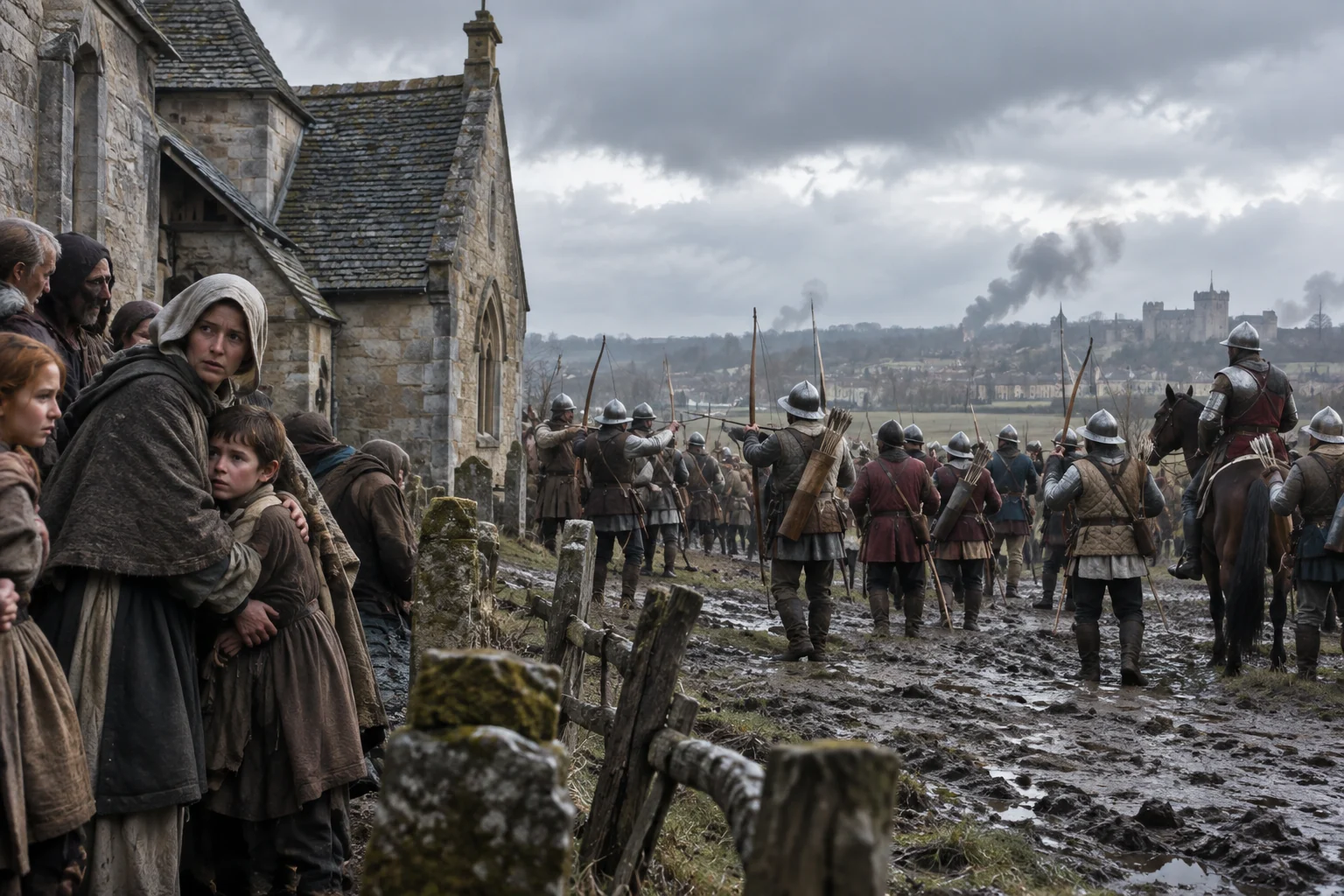
Medieval Tier 2
25. Hundred Years' War (1337–1453)
Overview
- Belligerents: The Kingdom of England (Plantagenet) vs. the Kingdom of France (Valois), with Burgundy, Brittany, Scotland, Castile, and others drawn in as allies at various phases.
- Dates: 1337–1453 — a series of campaigns separated by truces rather than continuous fighting.
- Theater: France (Normandy, Aquitaine/Gascony, northern France, Paris), the Low Countries, with naval action in the Channel.
- Outcome: French victory; England retained only Calais; the war ended Plantagenet continental ambitions and accelerated state formation in both kingdoms.
Causes
Edward III's dynastic claim to the French throne (through his mother Isabella), disputes over Gascony/Aquitaine and feudal jurisdiction, Flanders trade, the Franco-Scottish alliance, and the long Plantagenet–Capetian/Valois rivalry. Attribution: modern historians treat the war as structurally rooted in feudal and economic tensions, with the dynastic claim as trigger rather than sole cause.
Course
English victories at Sluys (1340), Crécy (1346), and Poitiers (1356, John II captured) led to the Treaty of Brétigny (1360); French recovery under Charles V and Du Guesclin reversed much of this; Henry V's Agincourt (1415) and the Treaty of Troyes (1420) made him heir to France; the Anglo-Burgundian alliance collapsed in 1435 (Treaty of Arras), Joan of Arc's campaigns (1429–1431) revived French momentum, and French fiscal and military reforms under Charles VII produced final victories at Formigny (1450) and Castillon (1453).
Casualties
- A tertiary summary figure of ~185,250 combat deaths / ~556,000 total military deaths was found in search; the underlying source must be checked before use — treat as UNVERIFIED pending verification.
- Black Death mortality must not be attributed to the war. Popular 2.3–3.5 million totals mix disease, famine, and warfare and are not dependable — UNVERIFIED.
- UNVERIFIED: any aggregate war death toll; disease/famine deaths folded into war totals.
Outcome & Legacy
End of English continental empire (except Calais, held until 1558); consolidation of French royal authority; military developments (longbow's zenith, then gunpowder artillery); Joan of Arc's myth; parliamentary and fiscal developments in England.
Historiography Pulse
- Jonathan Sumption's multi-volume history is the modern standard, emphasizing finance, state capacity, alliances, and logistics; he stresses the 1435 collapse of the Anglo-Burgundian alliance and French reform as decisive.
- Debate continues on Joan of Arc's military vs. symbolic role and on the war's coherence as a single conflict.
- Documentaries: well covered in popular military-history documentaries (Crécy, Agincourt, Joan of Arc).
- Validation tier: Tier 2 — strong evidence for the narrative; aggregate casualties unverifiable.
Sources
- http://en.wikipedia.org/wiki/Hundred_Years%27_War
- https://www.historyisnowmagazine.com/blog?offset=1674845280253&category=Blog+Post
- https://www.historytoday.com/archive/review/hundred-years-war-vol-5-jonathan-sumption-review
Images (8 views — files in images/hundred-years-war/)
| File | View |
|---|---|
| 01-hero-battle-art.jpg | Battle of Agincourt 1415 (art) |
| 02-theater-map.jpg | War theater map |
| 03-crecy.jpg | Battle of Crécy 1346 (art) |
| 04-joan.jpg | Joan of Arc statue, Orléans |
| 05-fortress.jpg | French medieval fortress |
| 06-longbow.jpg | English longbowmen (medieval art) |
| 07-froissart.jpg | Froissart's Chronicles illumination |
| 08-armor.jpg | 14th-century knightly armor (museum) |