Conflict dossier · #49 of 120
Dossier 49 — Indian Rebellion of 1857 (1857–1858)
Early Modern Tier 2
Dossier 49 — Indian Rebellion of 1857 (1857–1858)
Theater: Northern and central India — Meerut, Delhi, Kanpur (Cawnpore), Lucknow, Jhansi, Gwalior; the Gangetic plain as the main axis. Belligerents: Sepoy mutineers of the Bengal Army joined by dispossessed rulers (notably the Mughal emperor Bahadur Shah Zafar as figurehead, Rani Lakshmibai of Jhansi, Nana Sahib, Tantia Tope) and peasant uprisings vs. the British East India Company (British troops, loyal Indian regiments including Punjabi and Gurkha units). Validation tier: Tier 2 (moderate) — British figures documented; Indian deaths estimated with wide bands and methodology caveats.
Overview
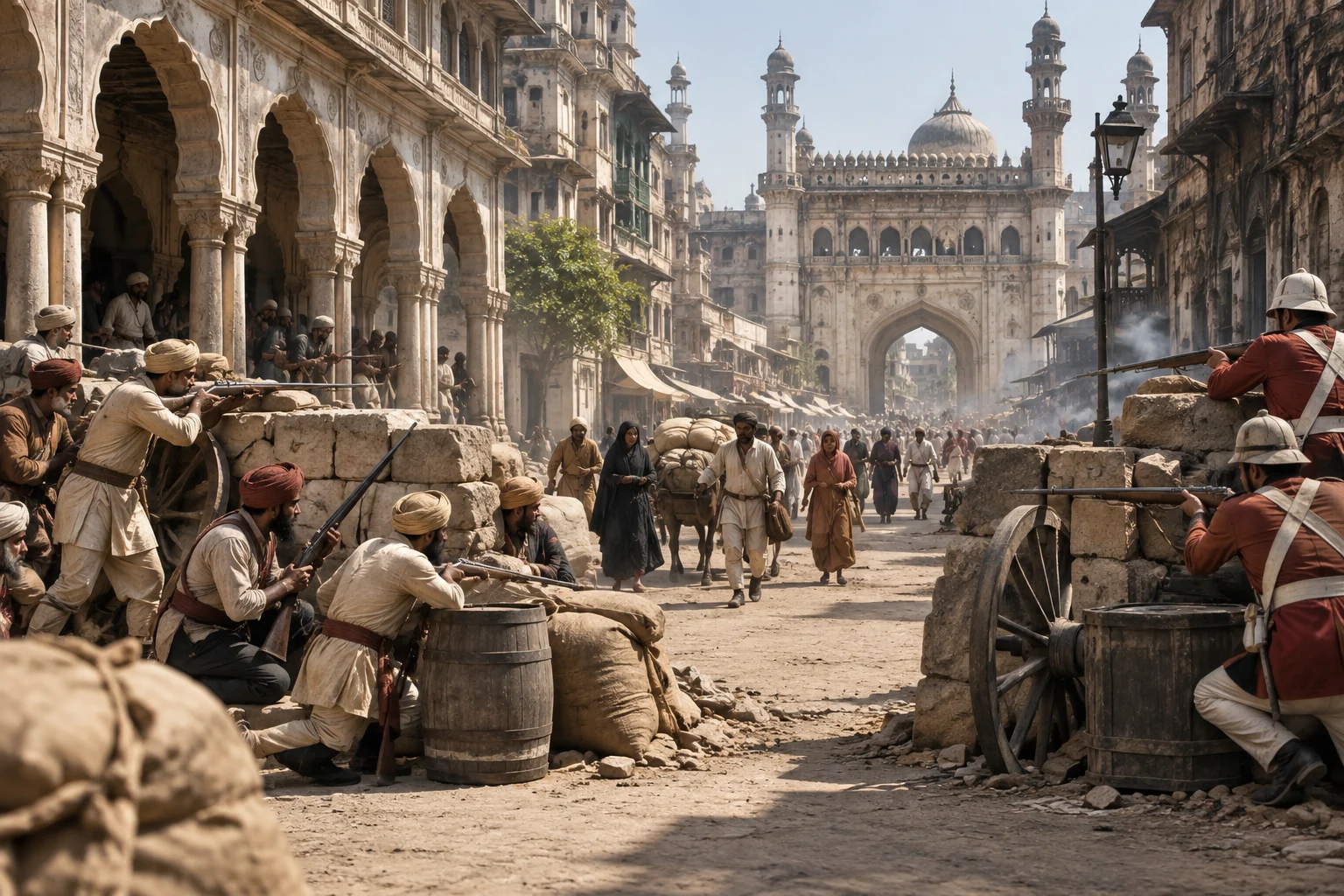
The largest anti-colonial uprising of the nineteenth century began as a sepoy mutiny at Meerut (10 May 1857) — triggered by the greased-cartridge controversy — and became a mass rebellion across northern India. The rebels seized Delhi and proclaimed the Mughal emperor; the British, after the sieges of Delhi (recaptured September 1857), Lucknow, and Kanpur, suppressed the rebellion with extensive reprisals by mid-1858. The British Crown assumed direct rule, ending the East India Company's administration.
Causes (attributed)
- Sepoy grievances: the Enfield rifle's greased cartridges (rumored to use cow and pig fat), pay and service conditions, and the erosion of sepoy status (OER Project).
- Political dispossession: Dalhousie's Doctrine of Lapse annexations (Jhansi, Awadh 1856) and the cartridge issue fused elite and popular grievances.
- Contested: the rebellion's character — "mutiny" (British imperial framing) vs. "First War of Independence" (Indian nationalist framing, popularized by V. D. Savarkar, 1909); the scale and organization of popular vs. sepoy participation.
Course (brief, neutral)
The Meerut mutineers marched to Delhi and proclaimed Bahadur Shah Zafar emperor. Uprisings spread across the Gangetic plain; Kanpur's British garrison surrendered and its survivors were killed (the Bibighar massacre of European women and children, and British reprisals, became infamous on both sides). The British recaptured Delhi (September 1857), relieved and then captured Lucknow, and pursued rebel columns into 1858; Rani Lakshmibai died at Gwalior (June 1858). The rebellion was suppressed by mid-1858; the Government of India Act (1858) transferred rule to the Crown.
Casualties
- OER Project: over 50,000 sepoys dead or later executed, and another 100,000 civilians killed by suppression and reprisals.
- Demographic estimate: a rough comparison-based estimate puts Indian deaths at about 800,000, possibly more, including famine and epidemic deaths — this requires an explicit methodology caveat (it is a demographic residual, not a count).
- British: about 6,000 dead including civilians (compilation figure).
- Atrocity accounting: both the rebel killings of Europeans (Kanpur) and British reprisal killings (including mass executions at Delhi and Allahabad) are documented as events; comprehensive victim counts for each are UNVERIFIED.
Outcome and legacy
- End of East India Company rule; the British Raj began under the Crown (Queen Victoria's 1858 proclamation); the Indian Army was reorganized with a higher British-to-Indian ratio and "martial races" recruiting doctrine.
- Legacy: in Indian nationalist memory the "First War of Independence"; in British memory the "Mutiny" with its massacre narratives; the rebellion's reprisals remain a live issue in postcolonial historiography.
Historiography pulse
- Consensus: the cartridge issue as trigger but not sole cause; Dalhousie's annexations as structural driver; British reprisals as systematic and severe.
- Debates: mutiny vs. war of independence framing; the rebellion's popular base (Eric Stokes's peasant-revolt thesis vs. elite-conspiracy views); casualty accounting and the 800,000 demographic estimate's validity.
- Notable scholarship: links were not verified in this research pass.
UNVERIFIED list
- The 800,000 Indian-death demographic estimate (methodology caveat; not a count).
- Comprehensive victim counts for Kanpur, Delhi, and Allahabad reprisals.
- Famine/epidemic deaths attributable to the rebellion vs. background mortality.
Sources
- OER Project (casualties): https://www.oerproject.com/-/media/WHP/PDF/Unit5/WHP-1750-5-3-3-Read---1857-Indian-Uprising---820L.pdf
- OER Project (background): https://www.oerproject.com/-/media/WHP/PDF/Unit5/WHP-1750-5-3-3-Read---1857-Indian-Uprising---950L.pdf
- Overview: http://en.wikipedia.org/wiki/Indian_Rebellion_of_1857