Conflict dossier · #80 of 120
Iran–Iraq War (22 September 1980 – 20 August 1988)
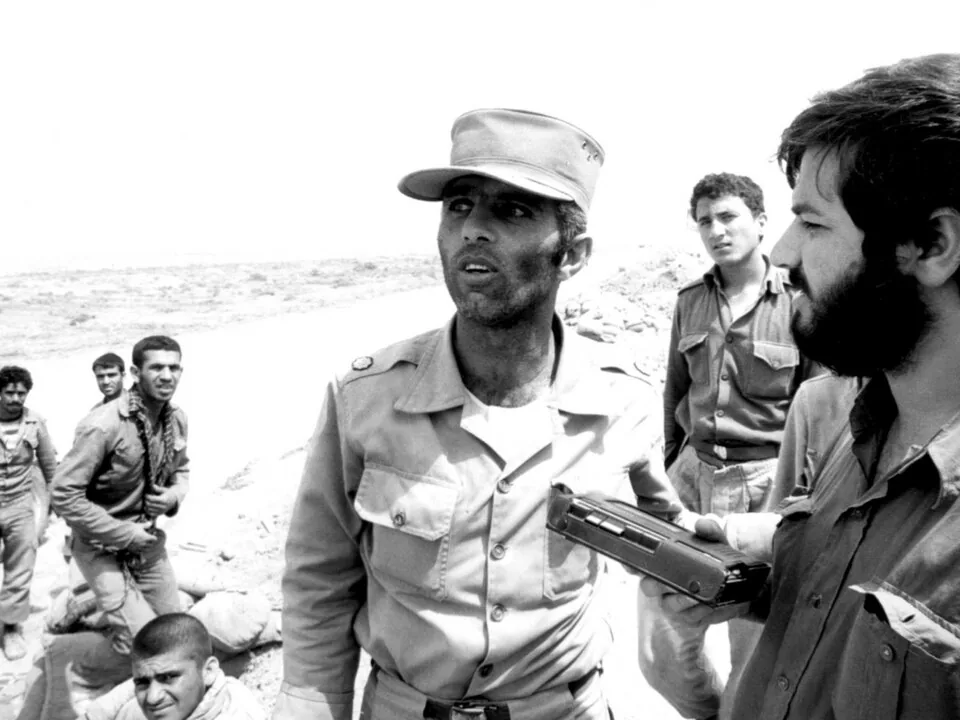
20th Century Tier 1
Iran–Iraq War (22 September 1980 – 20 August 1988)
Overview
- Belligerents: Iraq (Saddam Hussein; armed forces under generals including Adnan Khairallah) — financed by Saudi Arabia, Kuwait, and other Gulf states; tacitly supported with arms/intelligence by the U.S., USSR, France, and UK — vs. the Islamic Republic of Iran (Ayatollah Khomeini; regular Artesh plus IRGC and Basij volunteers) — largely isolated, aided mainly by Syria, Libya, North Korea, and (via Iran-Contra) limited U.S. arms.
- Theater: The Iran–Iraq border (Khuzestan, Kurdistan), the Persian Gulf ("Tanker War"), and both countries' cities ("War of the Cities").
- Outcome: Stalemate; UN Security Council Resolution 598 ceasefire accepted by Iran 18 July 1988 (effective 20 August); no border changes (1975 Algiers Agreement borders restored); the UN Security Council identified Iraq as the aggressor in 1991.
Causes (attributed)
- Historians (e.g., Pierre Razoux, The Iran-Iraq War; Dilip Hiro; Efraim Karsh) attribute Saddam's invasion to a mix of motives: reclaiming full sovereignty over the Shatt al-Arab waterway (abrogating the 1975 Algiers Agreement), fear of Khomeini's revolutionary export to Iraq's Shia majority, and opportunism during Iran's post-revolutionary military disarray.
- Iranian accounts frame the war as unprovoked Iraqi aggression abetted by Western and Gulf powers; Iraqi accounts at the time framed it as preemptive self-defense — the UN's 1991 aggressor finding supports the former framing, but the war's prolongation is attributed to both sides' maximalism (Iran's demand for Saddam's overthrow after 1982).
- International backing patterns are documented: Iraq received extensive Western/Gulf support; Iran was under arms embargo — a consensus fact with debated moral/political interpretation.
Course (brief, neutral)
Iraq invaded on 22 September 1980, seized Khuzestan border areas, but stalled before capturing key objectives. Iran counter-attacked from 1981–82, expelling Iraqi forces by mid-1982 and carrying the war into Iraq, demanding Saddam's removal. 1982–87: grinding trench warfare reminiscent of WWI — human-wave attacks, chemical weapons use by Iraq (documented, including Halabja 1988 against Kurdish civilians), the Tanker War in the Gulf, and missile strikes on cities. In 1988 Iraq's rebuilt army, with U.S. naval pressure on Iran (including the USS Vincennes' downing of Iran Air Flight 655 in July 1988), recaptured lost ground; Khomeini accepted the ceasefire, calling it "more deadly than drinking poison."
Casualties (named sources; contested)
- Total casualties: 1–2 million (Encyclopædia Britannica: "Estimates of total casualties range from 1,000,000 to twice that number"); killed on both sides "perhaps 500,000" (Britannica).
- Iran: 200,000–220,000 dead claimed by Iran; conservative Western estimates up to 262,000 (Wikipedia); Small Wars Journal (Kurzman 2013): "upwards of 750,000 Iranians killed" — an upper-end outlier, UNVERIFIED as precise.
- Iraq: 105,000–200,000 killed (Wikipedia); Kurzman: "over 500,000 Iraqis killed" — outlier, UNVERIFIED.
- Kurdish civilians (Anfal campaign, 1988, embedded in the war's end): 50,000–100,000 killed (Britannica; HRW documented).
- Chemical weapons: tens of thousands of Iranian casualties (consensus that Iraq used them extensively; exact figures UNVERIFIED).
- Economic damage: ~$500 billion combined (commonly cited estimate).
- Working range: ~500,000–1,000,000+ total dead; no authoritative count.
Outcome & legacy
- Both regimes survived; Iraq emerged heavily indebted (a factor in the 1990 invasion of Kuwait) and was identified by the UN as the aggressor in 1991.
- In Iran, the war entrenched the IRGC and hard-liners and created a vast "Holy Defense" martyrdom culture.
- The war normalized chemical-weapons use without international punishment — a widely noted precedent.
- Halabja (March 1988) became the emblematic atrocity; Saddam's cousin Ali Hassan al-Majid ("Chemical Ali") was later executed for Anfal-related crimes.
Historiography pulse
- Academic consensus: the deadliest conventional war between developing states; a war of attrition neither side could win; international complicity (arms, intelligence, financing for Iraq; silence on chemical weapons) prolonged it.
- Major debates: exact death tolls; the relative weight of Saddam's motives (Shatt al-Arab vs. anti-revolutionary fear); U.S. culpability in enabling Iraq; whether Iran's post-1982 continuation was justified self-defense or ideological overreach.
- Notable works: Pierre Razoux, The Iran-Iraq War (2015, the standard English military history); Dilip Hiro, The Longest War; the "Holy Defense Museum" in Tehran; extensive Iranian war cinema (The Glass Agency, etc.).
Validation tier
Tier 1 — multi-source consensus on dates, belligerents, course, chemical-weapons use, and stalemate outcome. Death tolls Tier 2 (Britannica's 500k-killed figure is the most-cited anchor; upper estimates contested).
UNVERIFIED points
- Precise death tolls on each side (500k–1M+ range).
- Chemical-weapons casualty counts.
- Internal Iraqi/Iranian decision-making (archives largely closed).
Sources
- https://www.britannica.com/event/Iran-Iraq-War (casualty ranges; accessed 2026-09-23)
- https://en.wikipedia.org/wiki/Iran–Iraq_War (detailed figures, UN aggressor finding)
- https://explaininghistory.org/2026/03/04/the-iran-iraq-war-1980-1988-a-crucible-of-blood-and-ideology/ (course narrative, Basij losses)
- https://warwingsdaily.com/wars/iran-iraq-war-1980-1988/
- https://archive.smallwarsjournal.com/jrnl/art/how-the-international-community’s-“blind-eye”-towards-the-iran-iraq-war-paved-the-way-for-violence-and-conflict-in-the-region (Kurzman/Gause figures)