Conflict dossier · #89 of 120
Kashmir conflict (1947–present)
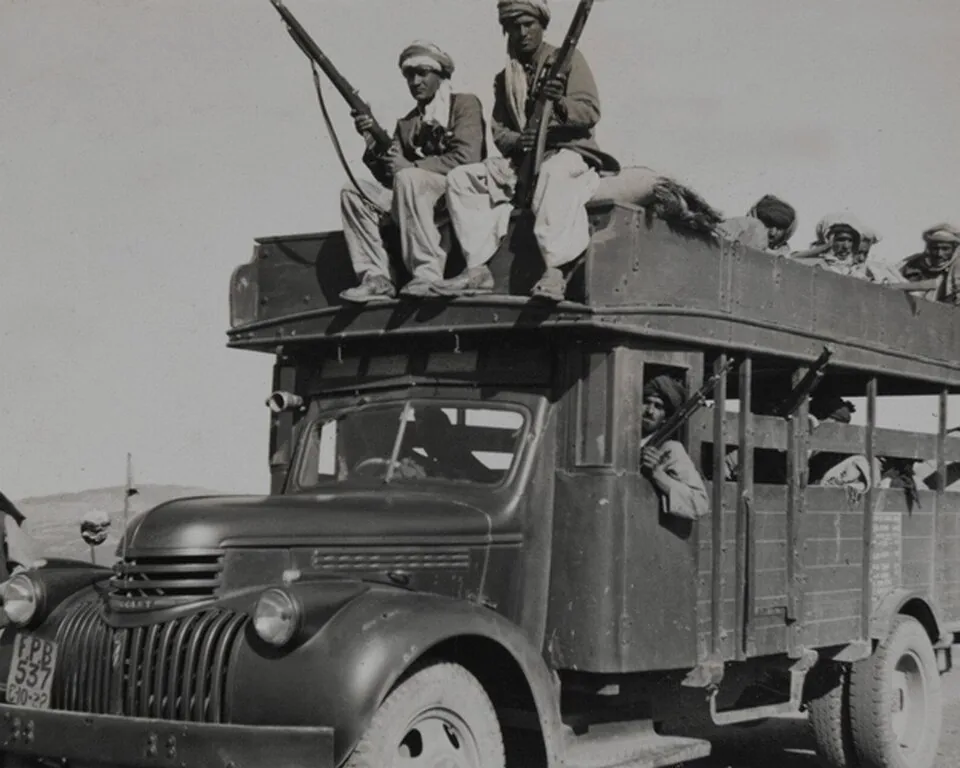
21st Century & Ongoing Tier 1
Kashmir conflict (1947–present)
Overview
- Belligerents: India and Pakistan (three interstate wars: 1947–48, 1965, 1971; plus the 1999 Kargil war and repeated standoffs); an insurgency in Indian-administered Jammu & Kashmir (J&K) from 1989, involving militant groups (e.g., Lashkar-e-Taiba, Jaish-e-Mohammed, Hizbul Mujahideen) fighting Indian security forces.
- Dates: 1947–present (disputed origin date; ongoing as of the September 2026 observation window).
- Theater: Kashmir region — Indian-administered J&K, Pakistani-administered Azad Kashmir and Gilgit-Baltistan, Chinese-administered Aksai Chin; the Line of Control (LoC) divides Indian- and Pakistani-administered areas.
Causes
- Pakistani officials and historians argue Kashmir's Muslim-majority population and the 1947 accession of the princely state to India (after invasion by tribal militias from Pakistan's side) created an unresolved self-determination dispute; UN Security Council resolutions in 1948–49 called for a plebiscite that was never held.
- Indian officials and analysts argue Pakistan has repeatedly used cross-border militancy as state policy, pointing to infiltration across the LoC and attacks such as the April 2025 Pahalgam attack; Pakistan denies these allegations.
- The insurgency's local dimension is attributed by scholars to grievances including rigged 1987 elections, heavy-handed counterinsurgency, and the erosion of autonomy — notably India's 2019 revocation of J&K's special status under Article 370, which Pakistan and Kashmiri leaders protested.
- None of these causes are treated here as settled fact; each is attributed to the claimant.
Course
The 1947–48 war produced the first LoC under a UN-brokered ceasefire; the 1965 war ended in stalemate under the Tashkent Declaration; the 1971 war (fought chiefly over East Pakistan) ended with the Simla Agreement recognizing the LoC. A separatist insurgency erupted in 1989, drawing in Pakistan-based militant groups through the 1990s; India deployed large security forces. The 1999 Kargil intrusion triggered a limited war. Cross-border strikes (2016, 2019 Balakot) followed militant attacks. The May 2025 crisis was the most severe confrontation since 1971: after the 22 April 2025 Pahalgam militant attack, India launched Operation Sindoor (7 May), claiming strikes on nine "terrorist infrastructure" sites in Pakistani-administered Kashmir and Pakistan's Punjab; Pakistan said strikes killed 31 civilians; Pakistan claimed it downed five Indian jets; artillery exchanges along the LoC killed at least 21 civilians in J&K before a U.S.-mediated ceasefire on 10 May (International Crisis Group, CrisisWatch, May 2025). ACLED noted in July 2026 that elections in Pakistani-administered Kashmir sparked deadly unrest.
Casualties
- Insurgency (1989–present): widely cited estimates range from ~40,000+ (figure associated with Indian government statements) to 100,000+ (claimed by Kashmiri separatist and some Pakistani sources). The true total is heavily contested → UNVERIFIED as a single figure; the dossier reports only the range.
- May 2025 crisis: at least 21 civilians killed along the LoC (ICG/CrisisWatch); Pakistan claimed 31 civilians killed in the 7 May strikes (claimed, unverified independently).
- Interstate wars: 1947–48 ~8,000 military deaths both sides (historians' rough estimate); 1965 several thousand each side; 1971 ~10,000–15,000 military deaths (Pakistan lost East Pakistan theater).
- The overall Kashmir conflict likely exceeds 100,000 deaths including all wars, but no authoritative consolidated figure exists → UNVERIFIED.
Outcome & legacy (as of September 2026)
Unresolved. J&K remains under direct Indian administration; India argues integration is complete after Article 370's revocation, while Pakistan continues to demand a plebiscite and the insurgency/militancy persists at a low but lethal level punctuated by periodic crises. The May 2025 escalation demonstrated that the conflict remains one of the world's most dangerous flashpoints between nuclear-armed states.
Tracker pulse
- UCDP lists the Kashmir dyad (India vs. Pakistan over territory, plus the Kashmir insurgency) as a persistent state-based conflict; casualty coding is low-intensity in most recent years except crisis spikes.
- ACLED's July 2026 regional update noted deadly unrest around elections in Pakistani-administered Kashmir.
- ICG CrisisWatch tracks the dyad monthly; May 2025 was flagged as the deadliest confrontation since 1971.
- HIIK's Conflict Barometer has consistently coded the Kashmir dispute as a violent crisis/war-level conflict.
- Debate: whether to count the 2019–present period as "occupation by integration" (critics' term) vs. constitutional normalization (Indian government's term).
Validation tier
Tier 1 — tracked by UCDP, ACLED, ICG, HIIK; interstate wars are documented across standard historiography.
UNVERIFIED points
- Total death toll of the Kashmir insurgency (range 40,000–100,000+, source-dependent).
- Pakistan's claim of five Indian jets downed in May 2025; India's claim that the nine Sindoor targets were all militant sites.
- Whether the overall conflict exceeds 100,000 deaths (no consolidated authoritative count).
Sources
- International Crisis Group, CrisisWatch — India-Pakistan (Kashmir), May 2025 entry: https://www.crisisgroup.org/crisiswatch/database?location[]=38&crisis_state=&created=
- ACLED Monthly Regional Updates, Asia-Pacific, July 2026: https://acleddata.com/series/monthly-regional-updates
- UCDP exploratory data: https://ucdp.uu.se/exploratory
- Standard historiography of the Indo-Pak wars (works of Srinath Raghavan, Victoria Schofield — dates and course, not verified against physical sources in this research pass).
Images
Sources
- International Crisis Group, CrisisWatch — India-Pakistan (Kashmir), May 2025 entry
- ACLED Monthly Regional Updates, Asia-Pacific, July 2026
- UCDP exploratory data
- Standard historiography of the Indo-Pak wars (works of Srinath Raghavan, Victoria Schofield — dates and course, not verified against physical sources in this research pass