Conflict dossier · #70 of 120
Korean War (1950–1953)
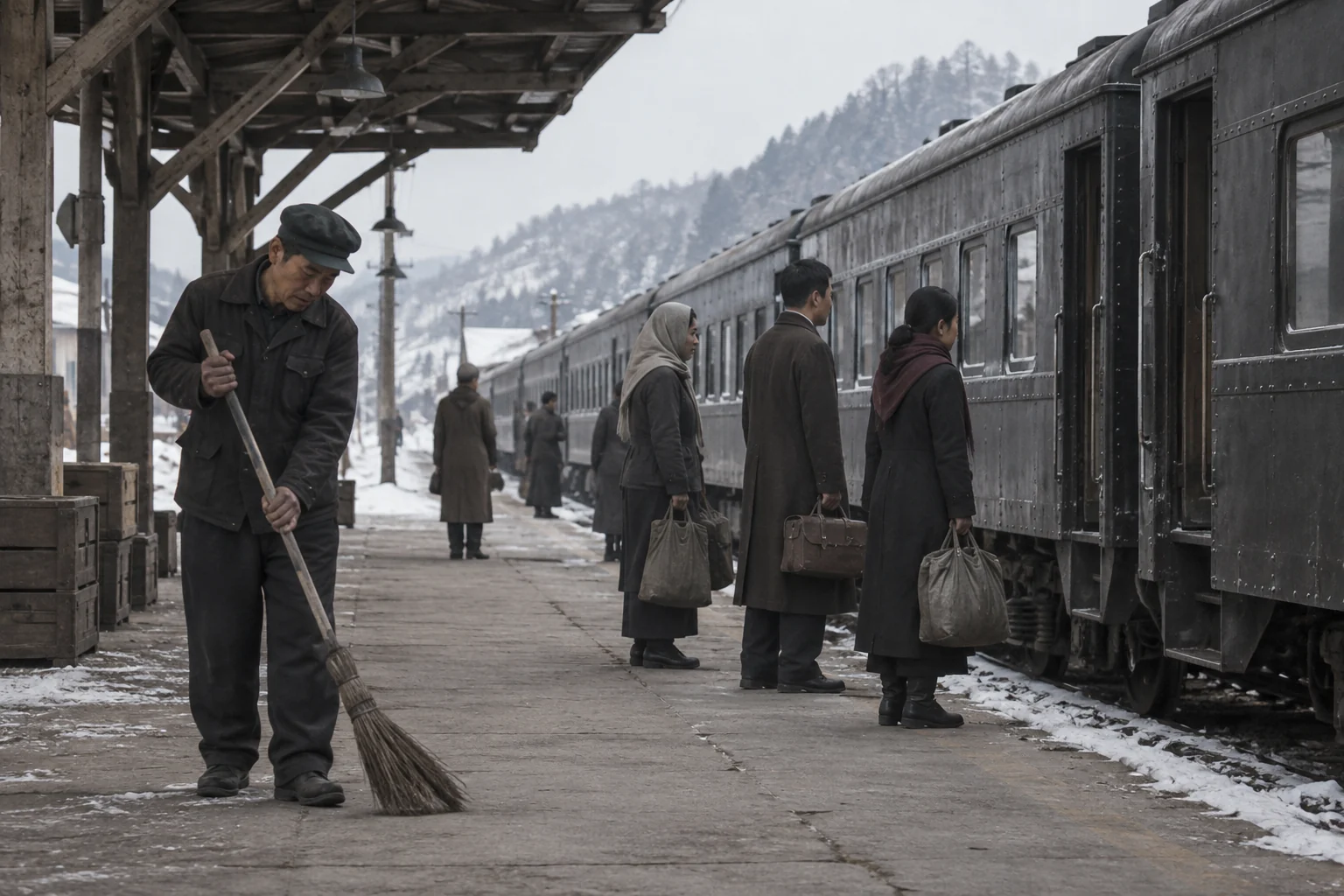
20th Century Tier 1
Korean War (1950–1953)
Overview
- Belligerents: North Korea (DPRK, Kim Il-sung; supported by China — the People's Volunteer Army — and the USSR with matériel) vs. South Korea (ROK, Syngman Rhee; supported by the UN Command — 16 combatant nations, ~90% US troops — led by Douglas MacArthur, then Matthew Ridgway, then Mark Clark).
- Dates: 25 June 1950 (North Korean invasion of the South) – 27 July 1953 (Korean Armistice Agreement); no peace treaty — a frozen conflict into the 2026 observation window.
- Theater: The Korean Peninsula — the 38th parallel, Seoul, the Pusan Perimeter, Inchon, the Chosin (Changjin) Reservoir, the DMZ.
Causes — attributed
- General historical consensus (CNN Fast Facts; bootcampmilitaryfitnessinstitute.com): Korea's division at the 38th parallel (1945) and the establishment of two ideologically opposed states in 1948; Kim Il-sung's determination to reunify by force, with Stalin's approval and Mao's acquiescence (documented in Soviet archives opened in the 1990s).
- Historiographic debates: (a) the extent of Stalin's vs. Kim's initiative — archival scholarship (e.g., Kathryn Weathersby) attributes the prime initiative to Kim with Stalin's conditional approval; (b) whether the war was primarily a civil war (Bruce Cumings' framing) or an international communist aggression (traditional Western framing); (c) the role of US signals — Dean Acheson's January 1950 "defense perimeter" speech excluding Korea is debated as a possible green light.
- Defamation discipline: atrocity claims (Bodo League massacres, No Gun Ri, etc.) are attributed to investigating bodies (South Korea's Truth and Reconciliation Commission, 2005–2010) and named scholars.
Course
North Korea invaded 25 June 1950 and nearly overran the peninsula, holding the UN/ROK forces in the Pusan Perimeter. MacArthur's Inchon landing (15 September 1950) reversed the war; UN forces advanced to the Yalu, triggering China's intervention (October–November 1950). After seesaw battles (Seoul changed hands four times; Chosin Reservoir, winter 1950–51), the front stabilized near the 38th parallel. Armistice talks began July 1951 and dragged on for two years amid attrition warfare (Heartbreak Ridge, Pork Chop Hill) and devastating UN bombing of the North. The armistice (27 July 1953) created the 4-km-wide Demilitarized Zone.
Casualties — ranges with named sources
- Total: ~3 million dead (mid-value; range 1.5–4.5 million), per PRIO data via bootcampmilitaryfitnessinstitute.com; Wikipedia: ~1 million military deaths + 1.5–3 million civilian deaths; factsanddetails.com: "Perhaps as many as three million died... around 900,000 soldiers and over two million North and South Korean civilians."
- Battle deaths: just under 1 million (PRIO range 644,696–1.5 million).
- By country (Encyclopedia Britannica via CNN): South Korea — 217,000 military, 1,000,000 civilian; North Korea — 406,000 military, 600,000 civilian; China — 600,000 military. US (Dept. of Defense): 33,739 hostile deaths, 2,835 non-hostile.
- Halberstam (Smithsonian, 2007, via factsanddetails.com): US 33,000 dead, 105,000 wounded; South Korea 415,000 killed, 429,000 wounded; Chinese/North Korean ~1.5 million dead (their figures kept secret — UNVERIFIED).
- David E. Sanger (NYT, 1994, via factsanddetails.com): South Korean official stats — 225,800 ROK troops, 294,150 North Koreans, 184,000 Chinese, 57,440 UN troops killed; ~250,000 civilians killed in combat.
- Civilians: Guenter Lewy estimates 2–3 million civilian deaths; Bruce Cumings ~2 million; Lewy suggests civilians may have been up to 70% of deaths (bootcampmilitaryfitnessinstitute.com). Charles K. Armstrong: 12–15% of North Korea's population (~10 million) died — "a figure close to or surpassing the proportion of Soviet citizens killed in World War II."
- Atrocities (attributed): South Korea's Truth and Reconciliation Commission (2005–2010) found 82% of investigated Korean War-era massacres were perpetrated by South Korean forces, 18% by North Korean forces (gabrielggr.us.to Wikipedia mirror).
Outcome & legacy
- Armistice, not peace; Korea remains divided; the DMZ is the world's most fortified border.
- South Korea's devastation laid the ground for its later economic miracle; North Korea's isolation hardened into the Kim dynasty's permanent rule.
- The war globalized the Cold War (NATO buildup, US-Japan security ties), established the precedent of "limited war," and integrated the US armed forces racially.
- Called "The Forgotten War" in the US (US News & World Report, 1951).
Historiography pulse
- Academic consensus: a war of Korean origin internationalized by Cold War intervention; Stalin's archival record confirms his approval role; Chinese intervention saved the DPRK.
- Major debates: (a) civil war vs. international aggression framing (Cumings vs. traditionalists); (b) civilian death tolls — 2–4 million band, heavily contested (Tier 3); (c) US bombing of North Korea — one of the most heavily bombed countries in history (Wikipedia) — and its moral/legal assessment; (d) No Gun Ri and other US-attributed civilian killings — investigated by the AP (1999) and acknowledged in part by the US Army.
- Notable scholarship: Bruce Cumings, The Origins of the Korean War (1981/1990); David Halberstam, The Coldest Winter (2007); Max Hastings, The Korean War (1987); Sheila Miyoshi Jager's work on the war as Korean civil war; documentaries include PBS and Korean productions.
Validation tier
Tier 1 on causes, course, outcome; Tier 2 on military deaths (named official sources, ranges); Tier 3 on civilian deaths and North Korean/Chinese military deaths (flagged — secret or estimated).
UNVERIFIED points
- Total deaths: 1.5–4.5 million across sources — no settled figure.
- North Korean and Chinese military deaths: estimates only (184,000–600,000 Chinese; 294,150–406,000 North Korean) — both states kept figures secret.
- Civilian deaths: 2–4 million band — the most contested element.
Sources
- Boot Camp & Military Fitness Institute, "What was the Korean War (1950-1953)?" — http://bootcampmilitaryfitnessinstitute.com/2021/03/26/what-was-the-korean-war-1950-1953/
- Wikipedia, "Korean War" — http://en.wikipedia.org/wiki/Korean_War
- CNN, "Korean War Fast Facts" — https://www.cnn.com/world/asia/korean-war-fast-facts?cid=external-feeds_iluminar_meta
- Facts and Details, "Korean War" — https://factsanddetails.com/korea/Korea/Korean_War/entry-7168.html
- Cambridge Core, Journal of East Asian Studies, "Unexplored Consequences of Violence Against Civilians During the Korean War" — https://www.cambridge.org/core/journals/journal-of-east-asian-studies/article/unexplored-consequences-of-violence-against-civilians-during-the-korean-war/70A4D179BF2A64796D0C1FD7F8EAF79E
Images
Sources
- Boot Camp & Military Fitness Institute, "What was the Korean War (1950-1953)?"
- Wikipedia, "Korean War"
- CNN, "Korean War Fast Facts"
- Facts and Details, "Korean War"
- Cambridge Core, Journal of East Asian Studies, "Unexplored Consequences of Violence Against Civilians During the Korean War"