Conflict dossier · #78 of 120
Lebanese Civil War (13 April 1975 – 13 October 1990)
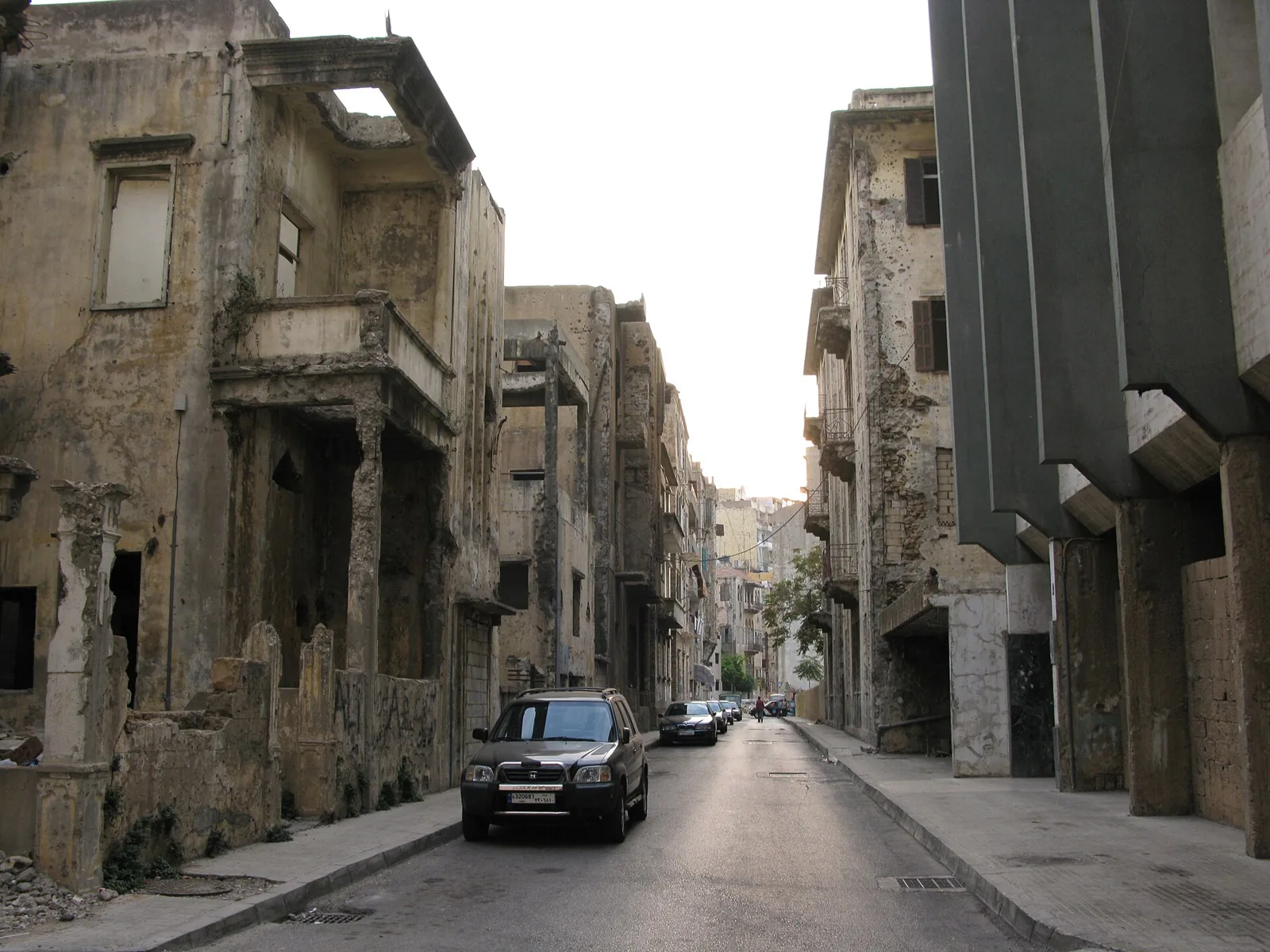
20th Century Tier 1
Lebanese Civil War (13 April 1975 – 13 October 1990)
Overview
- Belligerents: A shifting mosaic: Lebanese Front/Christian militias (Kataeb/Phalange, Lebanese Forces under Bachir then Samir Geagea, Army of Free Lebanon) vs. Lebanese National Movement (Druze PSP under Kamal then Walid Jumblatt, leftists, Sunnis) allied with the PLO (Yasser Arafat); later Amal and Hezbollah (Shia), plus Syrian forces (from 1976), Israeli forces (1978, 1982–85), the Multinational Force, and UNIFIL.
- Theater: Lebanon, centered on Beirut (divided by the "Green Line").
- Outcome: Taif Agreement (1989) rebalanced the confessional system; Syrian tutelage over Lebanon (1990–2005); all militias disarmed except Hezbollah.
Causes (attributed)
- Historians (e.g., Theodor Hanf, Coexistence in Wartime Lebanon; Samir Khalaf; Fawwaz Traboulsi, A History of Modern Lebanon) attribute the war to the breakdown of the 1943 National Pact's confessional power-sharing under demographic change (no census since 1932), the Cairo Agreement (1969) giving the PLO a "state within a state," and the influx of Palestinian fighters after Black September in Jordan.
- The bus massacre at Ain al-Rummaneh (13 April 1975, Kataeb gunmen killing Palestinians) is the consensus trigger; scholars debate whether the war was primarily internal (confessional system failure) or externally driven (PLO presence, Syrian/Israeli intervention, Cold War) — most now argue it was both.
- Israeli and Syrian interventions are attributed by their defenders to security concerns and by critics to territorial ambition; the literature treats both as escalatory.
Course (brief, neutral)
1975–76: Christian–Palestinian/leftist fighting, Syrian intervention, and the "Two-Year War." 1978: first Israeli invasion (Litani). 1982: full Israeli invasion, siege of Beirut, PLO evacuation, Sabra and Shatila massacres (carried out by Kataeb militiamen while Israeli forces controlled the perimeter — the Kahan Commission found Israeli indirect responsibility; exact responsibility remains politically contested), Bachir Gemayel's assassination and election. 1983–84: Multinational Force bombings, Israeli withdrawal to the south. 1985–88: "War of the Camps," intra-Christian and intra-Muslim fighting. 1988–90: Aoun's "War of Liberation" against Syria, then the Taif Agreement; Aoun's defeat in October 1990 ended the war.
Casualties (named sources; contested)
- Total deaths: commonly ~120,000 (Wikipedia); war-memorial.net (UCDP): 131,104 battle deaths; Brookings (Wadad Halwani): 144,240 dead plus 17,415 disappeared.
- Labaki and Abou Rjeily (1994), cited as the most reliable statisticians (via shoah.org.uk historiography review): ~90,000 killed, of whom ~20,000 were kidnapped/disappeared presumed dead; the review notes commonly repeated figures up to 150,000 derive from uncritical repetition of early-1990s press reports (Hanf 1993).
- Theodor Hanf's estimate is described as the second most reliable; real toll "possibly exceeds 100,000."
- Wounded: ~100,000–300,000 depending on source; displaced: ~1 million (roughly a fifth to two-thirds of the population depending on the source).
- Working range: 90,000–150,000 dead. Sabra and Shatila deaths: commonly cited 800–3,500 (range contested; exact figure UNVERIFIED).
Outcome & legacy
- The Taif Agreement kept confessionalism but rebalanced Christian–Muslim parliamentary parity and strengthened the prime minister; Syria dominated Lebanon until the 2005 Cedar Revolution after Rafik Hariri's assassination.
- Hezbollah retained its arms as a "resistance" force — the war's most consequential loose end.
- A 1991 general amnesty law shielded warlords-turned-politicians; Lebanon has no official war museum or truth commission, and the war is barely taught in schools — a much-studied "amnesia."
Historiography pulse
- Academic consensus: the war was multi-causal (confessional rigidity + Palestinian armed presence + regional intervention); no single "start" beyond April 1975; militia violence was intra-communal as well as inter-communal.
- Major debates: the true death toll (90k vs. 150k); Syrian vs. Israeli primary responsibility for prolongation; whether Taif resolved or froze the conflict; Sabra and Shatila responsibility (Kahan Commission's "indirect responsibility" finding for Israel vs. broader complicity arguments).
- Notable works: Theodor Hanf, Coexistence in Wartime Lebanon (1993); Samir Khalaf, Civil and Uncivil Violence in Lebanon; Fawwaz Traboulsi, A History of Modern Lebanon (2007); the Beit Beirut museum project; films West Beirut (1998), Waltz with Bashir (2008).
Validation tier
Tier 1 — multi-source consensus on causes, phases, outcome, and the amnesia/legacy analysis. Death toll Tier 2 (90,000–150,000; Labaki & Abou Rjeily's ~90k is the best-documented).
UNVERIFIED points
- Exact death toll within the 90k–150k range.
- Sabra and Shatila precise death toll.
- Full responsibility picture for specific massacres (attributed claims on all sides).
Sources
- https://en.wikipedia.org/wiki/Lebanese_Civil_War (accessed 2026-09-23)
- https://shoah.org.uk/the-historiography-and-the-memory-of-the-lebanese-civil-war/ (Labaki & Abou Rjeily / Hanf figures)
- https://www.brookings.edu/articles/collective-memory-and-amnesia-after-the-war-in-lebanon/516 (Halwani: 144,240 dead, 17,415 disappeared)
- https://www.war-memorial.net/Lebanese-Civil-War--3.187 (UCDP battle deaths)
- https://warwingsdaily.com/wars/the-lebanese-civil-war-1975-1990/