Conflict dossier · #103 of 120
Libyan Civil Wars (2011–present)
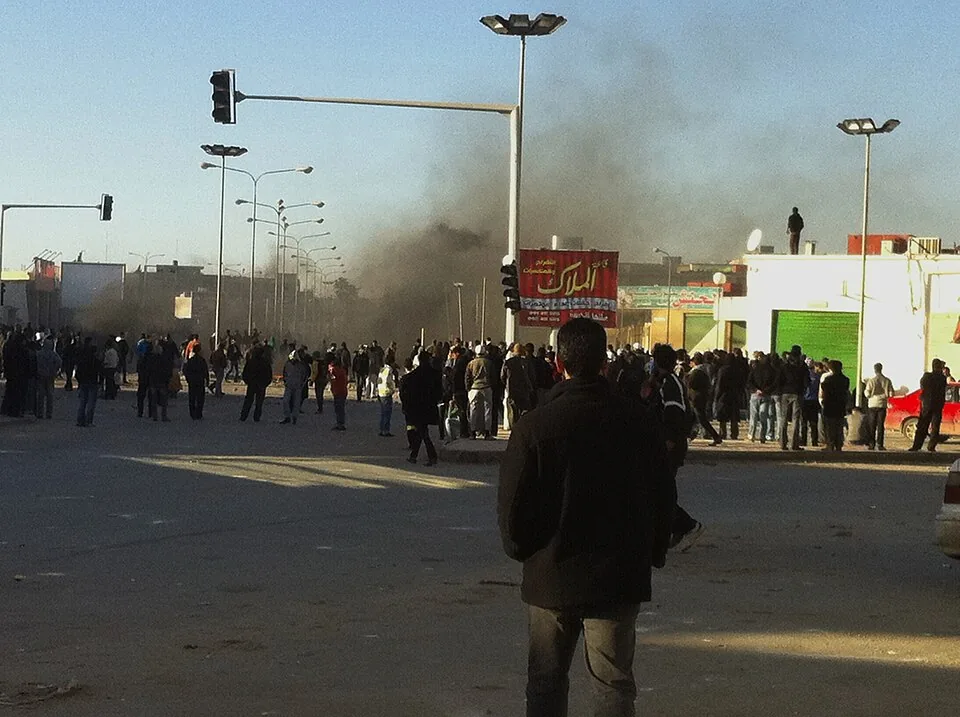
21st Century & Ongoing Tier 1
Libyan Civil Wars (2011–present)
Overview
- Belligerents: 2011: NATO-backed National Transitional Council rebels vs. Muammar Gaddafi's government. 2014–2020 (Second Civil War): UN-backed Government of National Accord (GNA, Tripoli) vs. Khalifa Haftar's Libyan National Army (LNA, Tobruk/east), plus ISIS's Libyan branch (2014–16, Sirte). Post-2020: Government of National Unity (GNU, Tripoli) vs. rival Government of National Stability (east) — armed standoff, no unified army.
- Dates: 2011–present (three phases: 2011 revolution; 2014–2020 civil war; 2020–present divided stalemate). The 2020 ceasefire is verified: the UN-brokered permanent ceasefire was signed 23 October 2020 in Geneva.
- Theater: Libya — Tripoli, Misrata, Benghazi, Sirte, Derna, Fezzan.
Causes
- The 2011 uprising is attributed by analysts to the Arab Spring wave, Gaddafi's 42-year authoritarian rule, and eastern marginalization; NATO's intervention (UNSCR 1973) tipped the balance — its legality and scope remain debated.
- The 2014 war's causes are attributed to the post-Gaddafi power vacuum, contested 2014 elections, and regional proxy involvement (the UAE, Egypt, and Russia backing the LNA; Türkiye and Qatar backing Tripoli governments — widely reported, officially denied in part).
- Analysts attribute the post-2020 stalemate to failed election timelines (the Dec 2021 vote collapsed) and entrenched foreign forces (Wagner/Africa Corps in the east, Turkish forces in the west).
Course
The 2011 revolution toppled and killed Gaddafi (Oct 2011) after NATO's air campaign. Militia fragmentation led to the 2014 split: Haftar's Operation Dignity vs. Libya Dawn; two rival governments emerged. ISIS seized Sirte in 2015 and was destroyed there in 2016 (US-backed Misratan forces). Haftar's 2019–20 Tripoli offensive failed after Turkish intervention; the 23 Oct 2020 ceasefire froze front lines. The 2021 unity government (GNU) never reunified institutions; a rival eastern government was appointed in 2022. As of 2025–26: no unified elections, periodic Tripoli militia clashes (May 2025 fighting killed 8+), Derna's 2023 flood catastrophe (thousands dead — disaster, not war), and continued Russian/Africa Corps entrenchment in the east.
Casualties
- 2011 war: commonly cited ~10,000–30,000 deaths (estimates vary widely; the NTC claimed 25,000+, others far lower) → UNVERIFIED as exact.
- 2014–2020 war: ACLED-based estimates ~10,000–20,000+; no consolidated authoritative figure → UNVERIFIED as exact.
- Sirte anti-ISIS (2016): ~700+ Misratan fighters and hundreds of ISIS militants killed (claimed figures).
- Displacement: hundreds of thousands cumulatively (UNHCR/IOM Libya figures vary by year).
Outcome & legacy (as of September 2026)
Unresolved stalemate. Libya is partitioned between rival administrations with foreign forces embedded; oil production continues intermittently. The 2011 intervention's legacy — regime change without stabilization — remains a landmark debate in intervention policy; the 2023 Derna flood exposed the institutional collapse.
Tracker pulse
- UCDP coded Libya as active through 2020; post-ceasefire violence is tracked at lower intensity.
- ACLED tracks Libya continuously; ICG covers the political process.
- HIIK codes the current situation as a violent crisis.
- Debate: whether the post-2020 period counts as a continuing civil war (frozen conflict) or a political crisis — trackers differ.
Validation tier
Tier 1 — UCDP (through 2020), ACLED, ICG, HIIK, UN (UNSMIL) reporting; casualty totals Tier 2–3 (no consolidated counts).
UNVERIFIED points
- Exact death tolls for the 2011 war (10,000–30,000 range) and 2014–2020 war.
- Foreign mercenary/force numbers (Wagner/Africa Corps, Syrian fighters — estimates vary).
Sources
- CRS, Libya: Conflict, Transition, and U.S. Policy (updated 2025): https://www.congress.gov/crs_external_products/RL/PDF/RL33142/RL33142.120.pdf
- Wikipedia, Libyan civil war (2014–2020) (ceasefire, phases): https://en.wikipedia.org/wiki/Libyan_civil_war_(2014–2020)