Conflict dossier · #53 of 120
Dossier 53 — Mahdist War (1881–1899)
Early Modern Tier 2
Dossier 53 — Mahdist War (1881–1899)
Theater: Sudan — Khartoum, Omdurman, Kordofan, the Red Sea coast, and the Nile valley; the 1896–1898 reconquest advanced up the Nile from Egypt. Belligerents: The Mahdist state (followers of Muhammad Ahmad, the self-proclaimed Mahdi, and after his 1885 death his successor Abdallahi ibn Muhammad, the Khalifa) vs. the Anglo-Egyptian forces (Egyptian army under British officers, then Kitchener's Anglo-Egyptian expeditionary force from 1896). Validation tier: Tier 2 (moderate) — Omdurman figures well attested (Britannica); war-wide aggregates are weak.
Overview
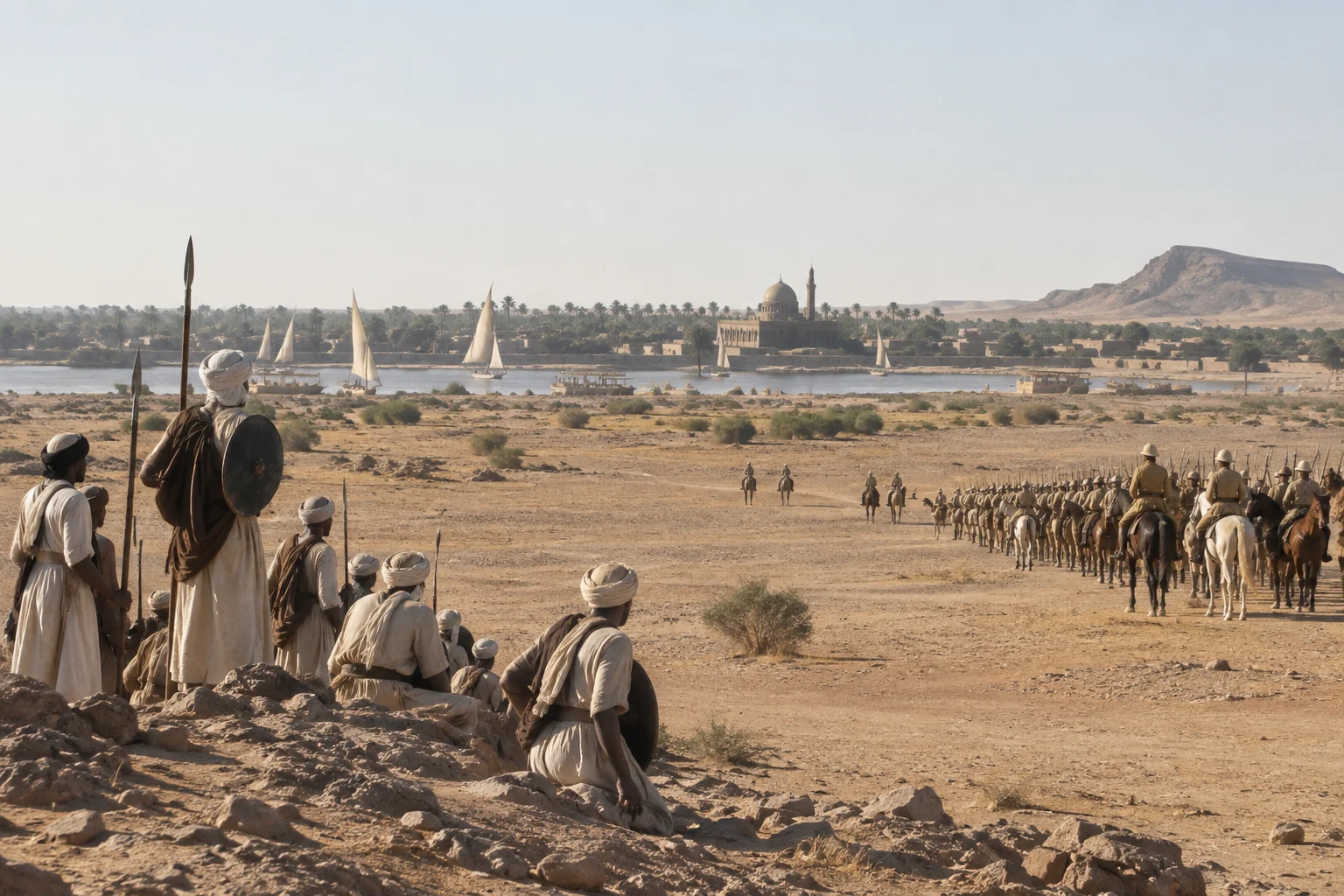
A Sudanese religious-political movement under Muhammad Ahmad rose against Turco-Egyptian rule, captured Khartoum and killed General Charles Gordon (January 1885), and established a Mahdist state. Britain, after a decade of inaction, authorized reconquest: Horatio Herbert Kitchener's Anglo-Egyptian army advanced methodically up the Nile (1896–1898), destroying the Mahdist army at Omdurman (2 September 1898) — a one-sided battle showcasing Maxim guns and artillery against spearmen. The Khalifa was killed at Umm Diwaykarat (November 1899), ending the war; the Anglo-Egyptian Condominium over Sudan followed (1899).
Causes (attributed)
- Religious mobilization: Muhammad Ahmad proclaimed himself the Mahdi (1881), calling for purification of Islam and resistance to the Turco-Egyptian administration, whose taxation and anti-slavery enforcement alienated Sudanese groups.
- Egyptian misrule and British entanglement: Cairo's fiscal crisis and corruption delegitimized its Sudanese administration; Britain's occupation of Egypt (1882) made Sudan Britain's strategic problem (militarytrader.com).
- Contested: the Mahdist movement as proto-nationalism vs. theocratic revolution; Gordon's mission and death as heroic sacrifice vs. imperial folly; Kitchener's desecration of the Mahdi's tomb (bones thrown into the Nile; the skull reportedly kept as a trophy) as atrocity vs. the norms of the era.
Course (brief, neutral)
Mahdist forces annihilated Hicks Pasha's Egyptian army at El Obeid (1883); Gordon was besieged in Khartoum and killed when it fell (January 1885), two days before a relief column arrived. The Mahdi died of typhus months later; the Khalifa consolidated the state. Kitchener's reconquest (1896–1898) built railways and gunboats as it advanced, winning at Firket, Hafir, Atbara (April 1898), and Omdurman (September 1898), where about 10,000–12,000 Mahdists were killed against some 47–48 Anglo-Egyptian dead. Khartoum was reoccupied; the Fashoda incident with France followed. The Khalifa's remnants were destroyed at Umm Diwaykarat (24 November 1899).
Casualties
- Omdurman (2 September 1898): Mahdist losses about 10,000 killed (Britannica: 10,000 killed, 10,000 wounded, 5,000 captured; other accounts up to 12,000 killed); Anglo-Egyptian losses about 47–48 dead and ~382 wounded.
- War-wide: Kitchener's campaign cost about 1,500 Anglo-Egyptian lives (war-history account); Mahdist and Sudanese civilian deaths across 1881–1899 — including famine during the Khalifa's rule and the reconquest — are not reliably aggregated. Any war-wide total is UNVERIFIED.
- Distinguish: the 1883 Hicks disaster and Gordon's garrison losses are counted within the war but lack consolidated figures.
Outcome and legacy
- The Anglo-Egyptian Condominium Agreement (January 1899) made Sudan effectively a British protectorate until independence (1956).
- Legacy: Omdurman became the symbol of industrial firepower against pre-industrial armies (and of its moral costs — the Westminster Gazette's criticism of bayoneting the wounded); Gordon's death shaped British imperial mythology; the Mahdi's rebuilt tomb remains a Sudanese nationalist symbol.
Historiography pulse
- Consensus: Omdurman as a technological massacre; the Mahdist state as a genuine Sudanese political formation, not mere fanaticism; the reconquest's railway-and-gunboat logistics as the model of late-Victorian campaigning.
- Debates: the tomb desecration and treatment of the wounded as war crimes by modern standards; Winston Churchill's The River War (1899) as both source and self-serving narrative; Mahdist vs. Sudanese-nationalist framings.
- Notable scholarship: Winston Churchill, The River War (1899) — primary account. Links were not verified in this research pass.
UNVERIFIED list
- Any war-wide death total (1881–1899).
- Sudanese civilian deaths under the Khalifa and during the reconquest.
- Precise Mahdist losses at battles other than Omdurman.
Sources
- Omdurman casualties and aftermath: https://britannica.com/event/battle-of-omdurman
- Campaign narrative: https://warfarehistorynetwork.com/article/the-british-empire-returns-to-sudan/
- Overview: https://www.militarytrader.com/militaria-collecting-101/the-mahdist-war
- Omdurman detail: https://www.warhistoryonline.com/history/battle-of-omdurman.html