Conflict dossier · #91 of 120
Papua conflict (1962–present)
21st Century & Ongoing Tier 2
Papua conflict (1962–present)
Overview
- Belligerents: Government of Indonesia (military/TNI, police) vs. the Free Papua Organisation (OPM) and its military wing, the West Papua National Liberation Army (TPNPB).
- Dates: 1962–present (armed insurgency phase from the 1960s; low-intensity ongoing as of the September 2026 observation window).
- Theater: Western New Guinea — Indonesia's Papua provinces (Central Papua, Highland Papua, South Papua, Southwest Papua, West Papua, Papua).
Causes
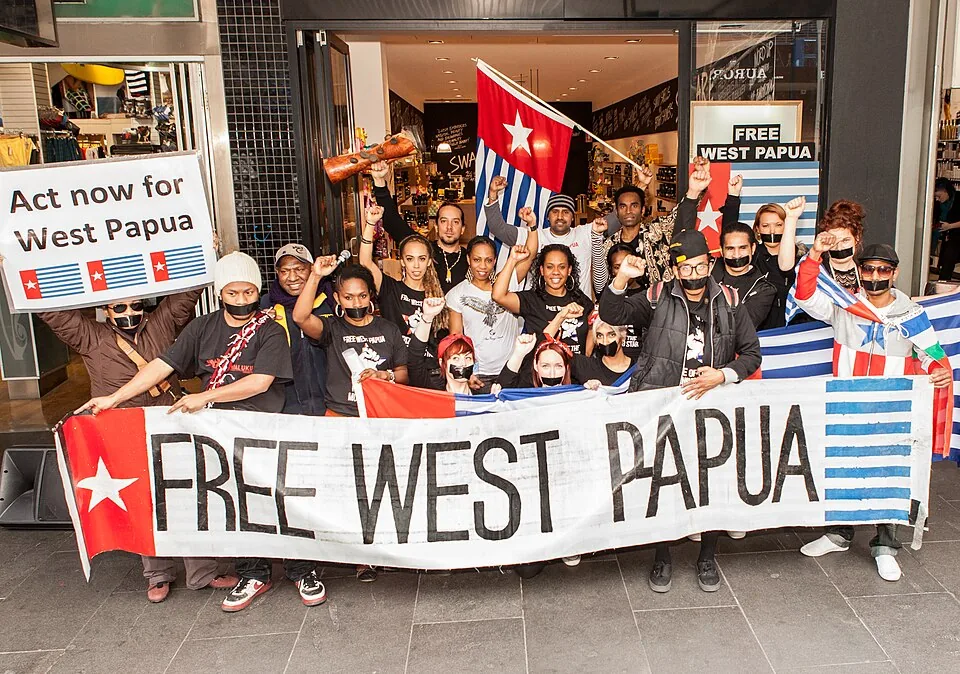
- Papuan nationalists argue the 1969 Act of Free Choice — in which ~1,025 selected representatives voted unanimously for integration with Indonesia under military presence — was illegitimate ("Act of No Choice"), and cite the Dutch colonial promise of Papuan independence, resource extraction (the Grasberg mine is frequently named), transmigration, and alleged human-rights abuses.
- Indonesia argues the territory is an integral part of the republic under the 1962 New York Agreement and the 1969 act, and frames OPM/TPNPB as an armed criminal group ("KKB"); it accuses separatist supporters abroad of misinformation.
- Analysts note the conflict's drivers include indigenous land rights, military business interests, and the expansion of extractive industries.
Course
Indonesia took control in 1963; the OPM launched a low-level insurgency in 1965. Violence has remained sporadic for decades, punctuated by military operations and the 2019 Papuan protests. Since 2018 the conflict has intensified in the central highlands. In May 2025, clashes in Intan Jaya reportedly killed 18 TPNPB members and two police officers (military claim; TPNPB claimed most dead were civilians — contested); a state of emergency and ~1,000 displaced followed (ICG CrisisWatch, May 2025). Human Rights Monitor documented 141 armed-conflict incidents in 2025 (up from 110 in 2023 and 135 in 2024), with civilian deaths of 63 (2023), 44 (2024), and 73 (2025) (Punggawa Journal analysis of HRM data). As of 30 June 2025, HRM counted more than 97,721 internally displaced people in West Papua (AWPA/HRM Q2 2025 report). Reports of Indonesian drone/airstrikes in Kiwirok (Oct 2025) circulated via Drop Site and activist outlets but are not independently confirmed.
Casualties
- Civilian deaths 2023–2025: 63, 44, 73 respectively (Human Rights Monitor, via Punggawa Journal).
- 2025 incidents: 141 armed-conflict incidents; Q2 2025: 18 civilians killed by TPNPB, 12 civilians killed by security forces, 7 security-force members and 10 TPNPB combatants killed (HRM Q2 2025 report via AWPA Sydney).
- IDPs: >97,721 as of 30 June 2025 (HRM).
- Total since 1960s: estimates vary widely (hundreds of thousands claimed by some Papuan advocacy sources, far lower in Indonesian official accounts) → UNVERIFIED; no authoritative consolidated figure.
Outcome & legacy (as of September 2026)
Unresolved, low-intensity. Indonesia maintains the conflict is a domestic security matter and restricts foreign journalist and UN access — a restriction human-rights groups repeatedly protest. Papuan nationalists continue to seek international support (e.g., via the United Liberation Movement for West Papua and Pacific-island diplomacy).
Tracker pulse
- UCDP lists the Papua conflict as a low-intensity state-based conflict.
- ICG CrisisWatch tracks Indonesia/Papua monthly (May 2025 entry cited above).
- HIIK Conflict Barometer codes Papua as a violent crisis.
- Debate: casualty attribution is sharply contested between the TNI and TPNPB/HRM; Indonesian authorities dispute HRM's methodology; HRM disputes military casualty claims. Access restrictions make independent verification nearly impossible — this is itself the key methodological dispute.
Validation tier
Tier 2 — strong evidence on one tracker family (UCDP/ICG/HIIK) plus corroboration from HRM reporting; heavily access-constrained, so figures carry wide uncertainty. (Borderline Tier 1 on conflict existence; Tier 2 on casualty specifics.)
UNVERIFIED points
- Total death toll since the 1960s.
- October 2025 Kiwirok drone-bombing claims (reported by activist outlets/Drop Site; no independent confirmation).
- Competing May 2025 Intan Jaya casualty breakdowns (military vs. TPNPB claims).
Sources
- Human Rights Monitor, Papua Monitor Q3/2025: https://humanrightsmonitor.org/wp-content/uploads/2025/10/HRM-Quarterly-Report_3_2025.pdf
- Punggawa Journal, "Armed Conflict in Papua and Its Impact on Civilians from 2023 to 2025": https://punggawajournal.com/psi/article/download/130/159/718
- ICG CrisisWatch Indonesia, May 2025: https://www.crisisgroup.org/crisiswatch/database?location%5B0%5D=44&page=0
- AWPA Sydney, Papua Quarterly Report Q2 2025: http://awpasydneynews.blogspot.com/2025/08/1-papua-quarterly-report-q2-2025.html
Images
Sources
- Human Rights Monitor, Papua Monitor Q3/2025
- Punggawa Journal, "Armed Conflict in Papua and Its Impact on Civilians from 2023 to 2025"
- ICG CrisisWatch Indonesia, May 2025
- AWPA Sydney, Papua Quarterly Report Q2 2025