Conflict dossier · #52 of 120
Dossier 52 — Russo-Turkish War, 1877–1878
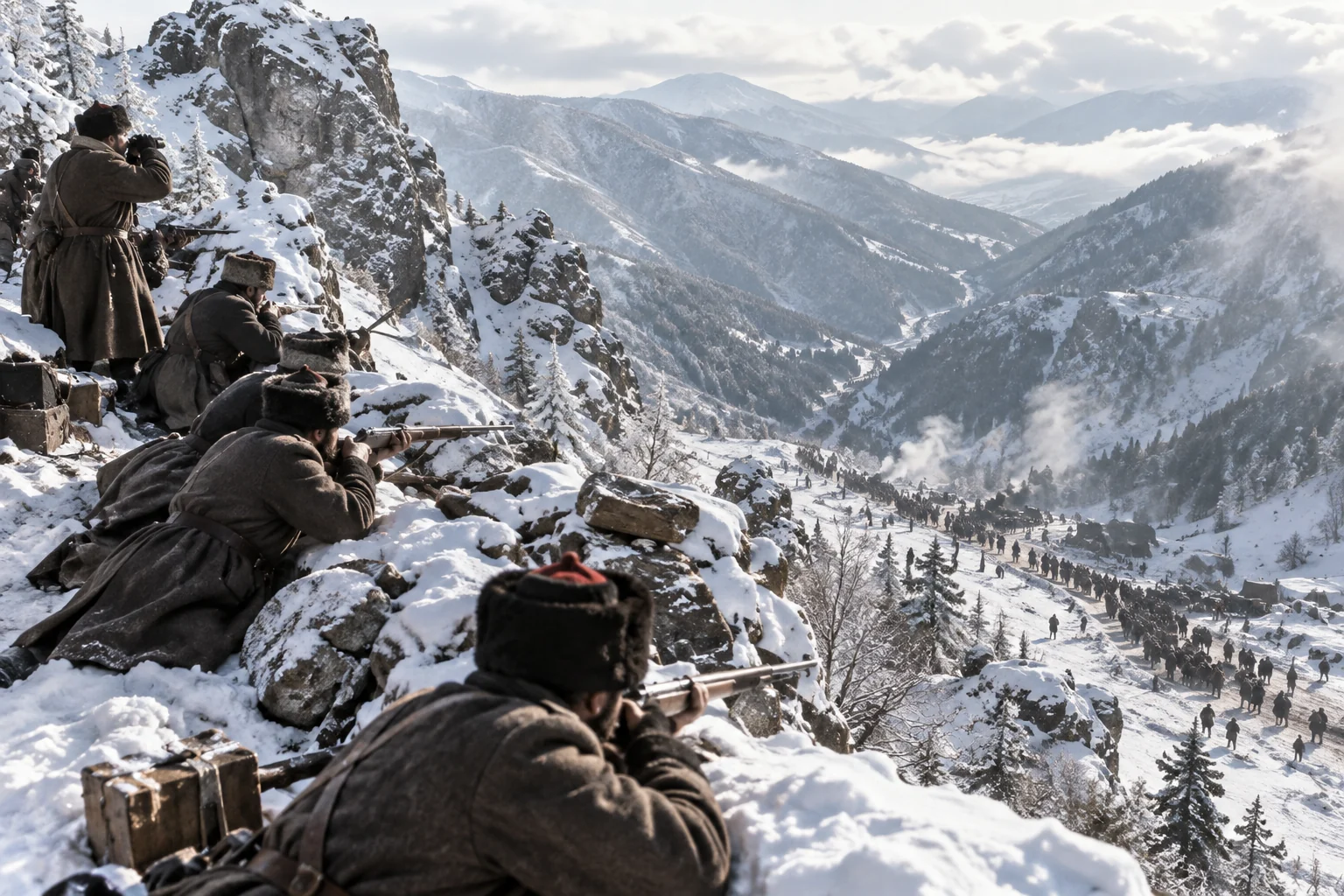
Early Modern Tier 2
Dossier 52 — Russo-Turkish War, 1877–1878
Theater: The Balkans (Bulgaria, the Danube, the Shipka Pass, Plevna) and the Caucasus (Kars, Erzurum). Belligerents: The Russian Empire with Romania, Serbia, Montenegro, and Bulgarian volunteers vs. the Ottoman Empire. Validation tier: Tier 2 (moderate) — per-side death bands from compiled scholarship; named casualty studies not identified.
Overview
The last and largest of the nineteenth-century Russo-Turkish wars, fought after the Ottoman suppression of the Bulgarian April Uprising (1876) and the failure of the Constantinople Conference. Russia declared war in April 1877; after the costly siege of Plevna (where Osman Pasha's defense held for five months), Russian forces crossed the Balkans in winter and reached the outskirts of Constantinople. The Treaty of San Stefano (March 1878) created a large Bulgaria; the Congress of Berlin (June–July 1878) revised it under Great Power pressure.
Causes (attributed)
- Balkan uprisings and Ottoman reprisals: the Herzegovina revolt (1875) and Bulgarian April Uprising (1876), and reports of massacres of Bulgarian civilians, generated pan-Slavic outrage in Russia and pressured Alexander II toward war (worldhistoryedu.com).
- Russian strategic aims: recovery of losses from the Crimean War, re-establishment in the Black Sea, and support for Balkan independence movements.
- Contested: the scale of the 1876 Bulgarian massacres (then and now a historiographical dispute); whether Russia sought genuine Balkan liberation or its own hegemony; the Ottoman reform effort's sincerity at the Constantinople Conference.
Course (brief, neutral)
Russia's Danube army crossed into Romania (June 1877) with Romanian cooperation; Osman Pasha fortified Plevna and repulsed three Russian assaults (July–September 1877) with heavy losses on both sides. After Eduard Totleben's siege works closed in, Plevna surrendered (December 1877). General Gurko's forces crossed the Balkan mountains in winter, won at Shipka-Sheinovo (January 1878), and advanced to San Stefano. In the Caucasus, Russian forces took Kars. The Treaty of San Stefano alarmed Britain and Austria-Hungary; the Congress of Berlin scaled back Bulgaria, recognized Romanian, Serbian, and Montenegrin independence, and assigned Bosnia to Austro-Hungarian administration and Cyprus to Britain.
Casualties
- Russian-led coalition: 96,733–111,166 dead (compilation): Russia 15,567–30,000 killed, 81,166 died of disease, 56,652 wounded; Romania 4,302 killed and missing; Bulgarian Legion 2,456 killed and wounded; Serbia and Montenegro 2,400 dead and wounded (http://en.wikipedia.org/wiki/Russo-Turkish_War_(1877%E2%80%931878)).
- Ottoman Empire: 90,000–120,000 dead (compilation): 30,000 killed, 60,000–90,000 dead of wounds and disease; 110,000 captured.
- Civilians: 500,000–1.5 million Muslim and Jewish civilians displaced (compilation); civilian deaths — including from the Bulgarian uprising's suppression, wartime reprisals, and the Circassian/Muslim refugee crisis — are not reliably counted.
- These bands are explicitly provisional: the named scholarship behind them was not identified in this research pass's searches.
Outcome and legacy
- Treaties of San Stefano and Berlin (1878): Romania, Serbia, and Montenegro independent; an autonomous Bulgarian principality; Russia gained Kars, Batum, and southern Bessarabia; Austria-Hungary occupied Bosnia; Britain occupied Cyprus.
- Legacy: the settlement rearranged the Balkans and stored up the crises that led to 1914; in Bulgarian memory the war is the Liberation War; the Muslim refugee flows reshaped Anatolia's demography.
Historiography pulse
- Consensus: Plevna as the war's military centerpiece; the Congress of Berlin as a Great Power revision of Russian gains; the war as a humanitarian intervention wrapped in imperial strategy.
- Debates: the 1876 atrocities' scale; Bulgarian vs. Russian vs. Ottoman narratives of liberation vs. occupation; civilian death tolls among Balkan Muslims.
- Notable scholarship: links were not verified in this research pass.
UNVERIFIED list
- The 96,733–111,166 and 90,000–120,000 bands' underlying scholarship.
- Civilian death totals (displacement documented; deaths not counted).
- The 500,000–1.5 million displacement band's basis.
Sources
- Figures and overview: http://en.wikipedia.org/wiki/Russo-Turkish_War_(1877%E2%80%931878)
- Triggers and diplomacy: https://worldhistoryedu.com/what-triggered-the-russo-turkish-war-1877-1878/
Images
Sources
- Figures and overview
- Triggers and diplomacy