Conflict dossier · #64 of 120
Second Sino-Japanese War (1937–1945)
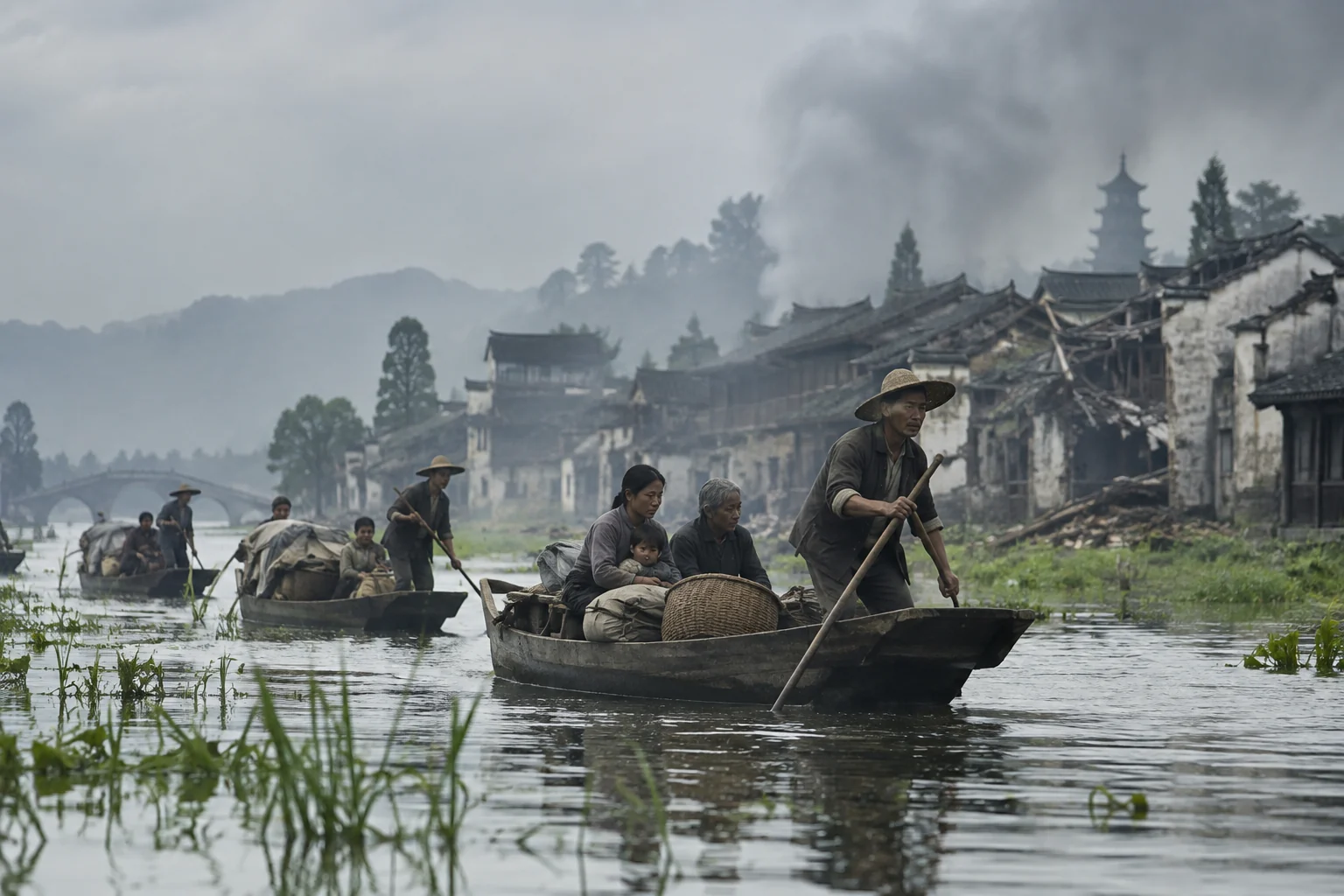
20th Century Tier 1
Second Sino-Japanese War (1937–1945)
Overview
- Belligerents: Republic of China (Nationalist/KMT armies under Chiang Kai-shek; CCP Eighth Route Army under Mao Zedong, Zhu De, Peng Dehuai; supported 1942–45 by the US, 1937–41 by the USSR) vs. Empire of Japan (with Manchukuo, Mengjiang, and the collaborationist Wang Jingwei regime).
- Dates: 7 July 1937 (Marco Polo Bridge Incident) – 9 September 1945 (Japanese surrender in China); Chinese historiography often dates the war from the 1931 Mukden Incident.
- Theater: Eastern China — North China Plain, Shanghai, Nanjing, Wuhan, the Yangtze valley, Burma Road; guerrilla zones in the north.
Causes — attributed
- General historical consensus (bootcampmilitaryfitnessinstitute.com; Wikipedia): Japanese expansionism on the Asian mainland — the 1931 Mukden Incident and creation of Manchukuo, followed by incremental Japanese advances in North China — collided with rising Chinese nationalism; the Marco Polo Bridge Incident (July 1937) escalated into full war.
- Scholars (e.g., Rana Mitter, Forgotten Ally, 2013) attribute the war's scale to Japan's attempt to force a quick settlement (the "three months" expectation) meeting unexpectedly durable Chinese resistance and Chiang's decision to trade space for time.
- Academic debate: the relative contribution of Nationalist conventional resistance vs. Communist guerrilla warfare to tying down Japanese forces; Japanese historians and Chinese historians differ sharply on casualty and atrocity figures (Tier 3).
Course
Japan seized Beijing, Tianjin, and Shanghai (August–November 1937, the Battle of Shanghai), then Nanjing (December 1937 — the Nanjing Massacre; see below). China moved its capital to Chongqing; the Yellow River flood (1938, breaching the dikes to slow Japan — casualty figures disputed, 400,000–900,000 per sinodefenceforum.com discussion of the flood) and the battles of Wuhan, Changsha, and the stalemate line followed. From 1941 Japan's "Three Alls" (sankō sakusen — "kill all, loot all, burn all") campaign devastated North China. The war merged into WWII's Pacific theater; Japan's Ichigo offensive (1944) took US airbases in China but overstretched Japanese forces. Japan surrendered in August 1945; formal surrender in China 9 September 1945.
Nanjing Massacre (embedded sub-event, per defamation discipline)
- Japanese forces' mass killing of Chinese civilians and POWs in Nanjing (December 1937–January 1938) is documented by multiple sources including the International Military Tribunal for the Far East; estimates of deaths range from ~40,000 (some Japanese revisionist historians) to 300,000+ (Chinese official position). The widely cited scholarly band is ~100,000–200,000 (e.g., Iris Chang's The Rape of Nanking; the 300,000 figure is the Chinese government's memorial figure, contested by Japanese revisionists). This dossier presents the event as documented by the Tokyo Tribunal with the death-toll range attributed; the exact figure is UNVERIFIED.
- Historian Mitsuyoshi Himeta (cited on Wikipedia): at least 2.7 million civilians died in the Three Alls campaign from May 1942 — an attributed scholarly estimate.
Casualties — ranges with named sources
- Chinese military: Nationalist: 1,320,000 KIA, 1,797,000 WIA, 120,000 MIA (Wikipedia/Scribd summary); a 1959 US academic study: 1.5 million killed in battle, 750,000 missing, 1.5 million dead of disease, 3 million wounded.
- Chinese civilian: Rudolph Rummel: 10,216,000 total Chinese dead, of which 3,949,000 "murdered directly by the Japanese army" and the rest from indirect causes (Wikipedia); Arne Westad: 14 million Chinese died directly from war, 2 million soldiers and the rest civilians (Rana Mitter considers this conservative); Dr. Bian Xiuyue (Chinese Academy of Social Sciences): 20,620,939 Chinese dead 1931–1945.
- Taiwanese official accounts: Nationalist Army 3,238,000 military casualties + 5,787,352 civilians = 9,025,352 total (Wikipedia).
- Japanese: Japan Defence Ministry official: 480,000 dead in China; Yomiuri Shimbun investigation: ~700,000 military dead in China since 1937 (excluding Manchuria); Hilary Conroy: 447,000; John W. Dower (War Without Mercy): 396,000 (388,605 Army + 8,000 Navy); contemporary PRC studies: 1,055,000 dead, 1,172,341 wounded (2,227,200 total) — the Chinese figure is contested by Japanese sources.
- Refugees: 95 million (Wikipedia).
- Henan famine 1942–43: 2–3 million starvation deaths; Guangdong famine: over 3 million fled or died (bootcampmilitaryfitnessinstitute.com — attributed).
Outcome & legacy
- Chinese (Allied) victory; Japan surrendered; China recovered Manchuria, Taiwan, and the Pescadores; China became a permanent UN Security Council member.
- The war devastated China — property losses valued at US$383 billion at 1937 exchange rates (per Chinese estimates cited on Wikipedia) — and bled the Nationalist government, setting up the CCP's 1949 victory in the resumed civil war.
- The war's memory remains politically charged: Nanjing, Unit 731, and "comfort women" are subjects of ongoing Sino-Japanese dispute; Japanese textbook controversies and Yasukuni Shrine visits periodically strain relations into the 2026 window.
- Rana Mitter's Forgotten Ally (2013) reframed the war in Western historiography as a major theater that tied down ~1 million Japanese troops.
Historiography pulse
- Academic consensus: China's resistance materially contributed to the Allied war effort by pinning down Japanese forces; the Nationalist government bore the brunt of conventional fighting.
- Major debates: (a) casualty and atrocity figures — Chinese, Japanese, and Western estimates differ by multiples (Tier 3); (b) the KMT vs. CCP contribution debate — politically charged in both the PRC and Taiwan; (c) the Nanjing death toll — 40,000 to 300,000+ across schools; (d) the Marco Polo Bridge Incident's exact circumstances.
- Notable scholarship: Rana Mitter, Forgotten Ally (2013); Hans van de Ven, China at War (2017); Iris Chang, The Rape of Nanking (1997); John W. Dower, War Without Mercy (1986); documentaries include the PRC's extensive memorial-museum complex at Nanjing.
Validation tier
Tier 1 on causes, course, outcome; Tier 2 on military casualty ranges; Tier 3 on civilian/atrocity death figures (flagged — contested across national schools).
UNVERIFIED points
- Total Chinese deaths: 10.2 million (Rummel) to 20.6 million (Bian Xiuyue) — no consensus.
- Nanjing Massacre death toll: 40,000–300,000+ across schools — no settled figure.
- Japanese military deaths in China: 396,000 (Dower) to 1,055,000 (PRC studies) — contested.
- Yellow River flood (1938) deaths: 400,000–900,000 — disputed.
Sources
- Wikipedia, "Second Sino-Japanese War" — http://en.wikipedia.org/wiki/Second_Sino-Japanese_War
- Boot Camp & Military Fitness Institute, "What was the Second Sino-Japanese War (1937-1945)?" — http://bootcampmilitaryfitnessinstitute.com/2021/01/27/what-was-the-second-sino-japanese-war-1937-1945/
- Alchetron, "Second Sino-Japanese War" (Japanese casualty detail) — https://alchetron.com/Second-Sino-Japanese-War
- SinoDefenceForum discussion (Yellow River flood figures) — https://www.sinodefenceforum.com/t/why-did-the-communists-win-the-chinese-civil-war.6630/page-4
Images
Sources
- Wikipedia, "Second Sino-Japanese War"
- Boot Camp & Military Fitness Institute, "What was the Second Sino-Japanese War (1937-1945)?"
- Alchetron, "Second Sino-Japanese War" (Japanese casualty detail
- SinoDefenceForum discussion (Yellow River flood figures