Conflict dossier · #79 of 120
Soviet–Afghan War (24 December 1979 – 15 February 1989)
20th Century Tier 1
Soviet–Afghan War (24 December 1979 – 15 February 1989)
Overview
- Belligerents: Soviet Union (40th Army) and the Democratic Republic of Afghanistan (PDPA government: Babrak Karmal, then Mohammad Najibullah) vs. the Mujahideen (fragmented Islamist and tribal factions — Jamiat-e Islami under Ahmad Shah Massoud and Burhanuddin Rabbani, Hezb-e Islami under Gulbuddin Hekmatyar, and others), backed by the United States (Operation Cyclone via the CIA/ISI), Pakistan, Saudi Arabia, China, Iran, and the UK.
- Theater: Afghanistan; refugee flows into Pakistan and Iran.
- Outcome: Soviet withdrawal completed February 1989 under the Geneva Accords (1988); Najibullah's government survived until 1992; Mujahideen factions then fought each other, enabling the Taliban's rise.
Causes (attributed)
- The consensus trigger: the PDPA's radical reforms after the April 1978 Saur Revolution provoked rural revolt; Soviet leaders, fearing the loss of a client and instability on their southern border, invaded — declassified Politburo records show a reluctant, misinformed decision (documented by historians Odd Arne Westad, Artemy Kalinovsky, and former Soviet general Alexander Liakhovsky, whose analysis is summarized via hrcak.srce.hr).
- Liakhovsky argues Soviet leaders became "victims of strategic misinformation," a claim echoed in some Western analyses that cite U.S. efforts to draw the USSR in (Brzezinski's later-disputed claims) — the "Afghan trap" thesis is debated, not settled.
- Historians broadly agree the invasion intensified a civil war already underway rather than starting one (the Herat uprising of March 1979 preceded it).
Course (brief, neutral)
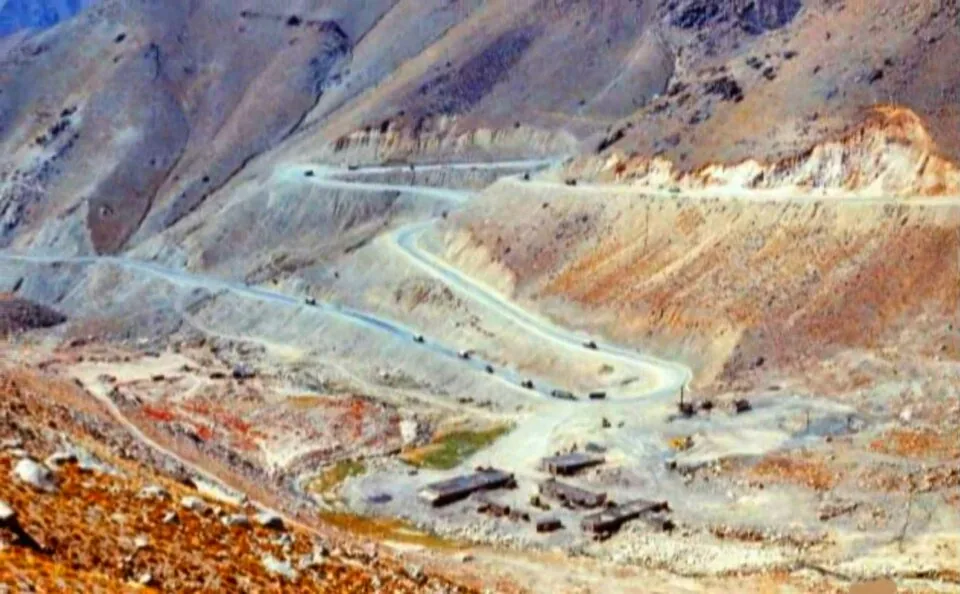
Some 100,000+ Soviet troops entered in December 1979, killed Hafizullah Amin, and installed Karmal. Soviet forces held cities and main roads; the Mujahideen waged rural guerrilla war from Pakistani sanctuaries, armed increasingly with U.S./Saudi-funded weapons (notably Stinger missiles from 1986). Soviet tactics included heavy bombing and depopulation of contested valleys. Gorbachev, seeking to cut losses, negotiated the 1988 Geneva Accords; withdrawal ran May 1988–February 1989. The war continued without the Soviets until Najibullah's fall in 1992.
Casualties (named sources; contested)
- Soviet military: 14,453 dead per official Soviet figures (9,511 combat, 2,386 wounds, 2,556 disease/accidents; 53,753 wounded); up to 26,000 in some estimates (Wikipedia citing sources).
- DRA (Afghan government) forces: 58,000+ killed 1980–89 (Wikipedia).
- Mujahideen: 75,000–90,000 killed; 150,000–180,000 total casualties (tentative estimates, Wikipedia).
- Afghan civilians: estimates of 562,000 / 1,000,000 / 1,500,000 / 2,000,000 (four cited figures, Wikipedia); commonly summarized as ~1 million (U.S. Army study, media.defense.gov: "an estimated one million Afghans killed"); total deaths "approximately 1–3 million" (Wikipedia).
- Displaced: ~5 million external refugees (Pakistan, Iran), ~2 million internally displaced (Wikipedia).
- Working range: ~1–2 million total dead; no systematic count exists. The 2-million upper figure is UNVERIFIED as precise.
Outcome & legacy
- The war drained Soviet resources and morale; historians (e.g., Westad, Kalinovsky) debate how much it contributed to the USSR's 1991 collapse versus internal causes — most now argue it was a contributing, not decisive, factor.
- Afghanistan descended into civil war (1992–96) and Taliban rule; the Mujahideen-era networks, foreign fighters, and U.S./Pakistani/Saudi funding structures seeded later jihadist movements — a widely noted but complex causal chain.
- Unexploded ordnance and landmines remain a major hazard; the war is memorialized very differently in Moscow, Kabul, and Washington.
Historiography pulse
- Academic consensus: a Cold War proxy war superimposed on an Afghan civil war; Soviet decision-making was flawed and based on poor intelligence; the Mujahideen were never a unified movement.
- Major debates: the "bear trap" thesis (did the U.S. deliberately lure the USSR in?); the war's weight in Soviet collapse; Stinger missiles' actual military significance (debated — often overstated in popular accounts); civilian death tolls.
- Notable works: Artemy Kalinovsky, A Long Goodbye: The Soviet Withdrawal from Afghanistan (2011); Odd Arne Westad, The Global Cold War; the U.S. Army study "Afghanistan 1973–89" (media.defense.gov, 2024); films Charlie Wilson's War (2007), The Beast (1988).
Validation tier
Tier 1 — multi-source consensus on dates, belligerents, proxy structure, withdrawal, and aftermath. Civilian death toll Tier 2–3 (order-of-magnitude estimates, heavily contested upper bound).
UNVERIFIED points
- Precise Afghan civilian deaths (562,000–2,000,000 cited range).
- The "Afghan trap" deliberate-lure thesis (attributed claims, disputed).
- Exact Mujahideen strength and casualty figures.
Sources
- https://en.wikipedia.org/wiki/Soviet%E2%80%93Afghan_War (infobox figures; accessed 2026-09-23)
- https://media.defense.gov/2024/May/08/2003459840/-1/-1/0/20240506_AFGHANISTAN_1979-89.PDF (U.S. Army study: ~1M Afghans killed)
- https://hrcak.srce.hr/clanak/28765 (Liakhovsky analysis of Soviet decision-making)
- https://warwingsdaily.com/wars/the-soviet-afghan-war-1979-1989/