Conflict dossier · #38 of 120
Dossier 38 — War of the Spanish Succession (1701–1714)
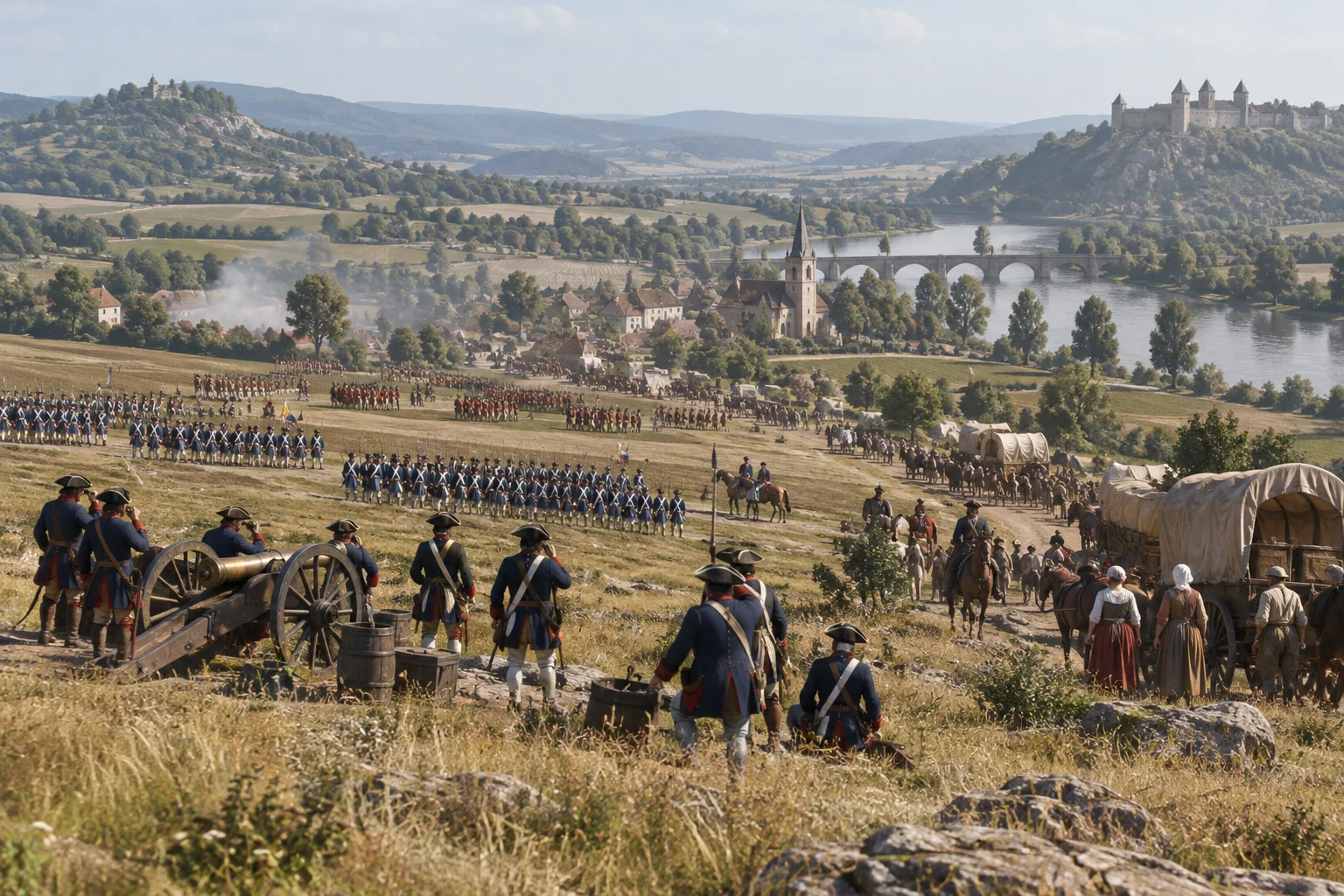
Early Modern Tier 2
Dossier 38 — War of the Spanish Succession (1701–1714)
Theater: Western and southern Europe — the Spanish Netherlands, Germany (Blenheim), Italy, Portugal, and Spain itself (including a Spanish civil-war dimension); naval actions in the Mediterranean and the Caribbean. Belligerents: Bourbon bloc — France (Louis XIV) and Bourbon Spain (Philip V) — vs. the Grand Alliance: the Habsburg Monarchy (Emperor Leopold I, then Joseph I and Charles VI), Great Britain, the Dutch Republic, Portugal (from 1703), Savoy (from 1703), and Prussia. Validation tier: Tier 2 (moderate) — political/diplomatic history well grounded; casualty aggregates come from weak secondary compilations.
Overview
The first Europe-wide war of the eighteenth century, fought over whether the Spanish throne would pass to a Bourbon (Philip, Duke of Anjou, grandson of Louis XIV) or a Habsburg (Archduke Charles), after the childless Charles II of Spain died in 1700. It fused a European succession war with a Spanish civil war and colonial-maritime rivalry. It ended with the treaties of Utrecht (1713) and Rastatt/Baden (1714): Philip V kept Spain and the Indies on condition the French and Spanish crowns never unite; Austria gained the Spanish Netherlands, Naples, Milan, and Sardinia; Britain kept Gibraltar and Minorca and gained commercial concessions.
Causes (attributed)
- Succession crisis: Charles II of Spain's death (1700) left competing Bourbon and Habsburg claims. His will named Philip of Anjou; the Emperor Leopold I backed his son Archduke Charles (country-data.com).
- Balance-of-power fear: Louis XIV's acceptance of the will, followed by moves perceived as uniting French and Spanish interests (including the Asiento slave-trade concession to France and French troops in the Spanish Netherlands), pushed Britain, the Dutch Republic, and Austria into the Grand Alliance (1701).
- Contested: whether Louis XIV intended a genuine union of the crowns (he issued letters patent preserving Philip's rights to the French throne, then renounced them at Utrecht); Spanish historiography debates whether the Bourbon succession was reform or foreign imposition.
Course (brief, neutral)
The Allies won major victories under Marlborough and Prince Eugene — Blenheim (1704), Ramillies (1706), Oudenarde (1708), Malplaquet (1709) — but could not force a decision. In Spain, Allied landings in Catalonia and Valencia sparked a civil war between supporters of Philip V and Archduke Charles (proclaimed Charles III in Barcelona); Madrid changed hands twice but the Bourbons held the Castilian heartland. After Emperor Joseph I died (1711), Archduke Charles became Emperor Charles VI, making a Habsburg Spain as threatening as a Bourbon one; Britain withdrew and negotiated Utrecht (1713). Austria continued briefly, then accepted Rastatt (1714).
Casualties
- Aggregate (weak secondary sources): one secondary compilation cites 400,000–700,000 soldier deaths; another unreliable compilation cites 1.25 million. Both are UNVERIFIED — no named scholarly casualty study was found in this research pass's searches.
- Named battle: Malplaquet (1709) was among the bloodiest battles of the era, but exact totals are contested. No reliable per-battleton figures surfaced.
Outcome and legacy
- Treaties of Utrecht (1713), Rastatt and Baden (1714): Bourbon Philip V confirmed in Spain with the permanent separation of the French and Spanish crowns; Austria's Italian and Belgian gains; Britain's acquisition of Gibraltar and Minorca and the Asiento; Savoy gained Sicily (later exchanged for Sardinia); the Dutch Barrier fortresses.
- Legacy: the settlement stabilized western Europe for a generation; it established the principle that the Spanish and French crowns must remain separate; in Catalonia, the fall of Barcelona (1714) remains a national-memorial date (the Diada).
Historiography pulse
- Consensus: the war as the first modern coalition war decided by finance and logistics as much as battles; Utrecht as the founding settlement of the eighteenth-century balance of power.
- Debates: Marlborough's generalship vs. the war's indecisiveness; the Spanish civil-war dimension (Bourbon centralization vs. fueros) in Catalan and Spanish national historiographies.
- Notable scholarship: links were not verified in this research pass.
UNVERIFIED list
- The 400,000–700,000 and 1.25M aggregate death figures (no named scholarly source).
- Battle-level casualty totals from contemporary accounts.
- Civilian death estimates for the Spanish theater.
Sources
- Succession background: http://www.country-data.com/cgi-bin/query/r-12952.html
- Overview: https://malevus.com/war-of-the-spanish-succession/
- Overview: http://bootcampmilitaryfitnessinstitute.com/2021/04/21/what-was-the-war-of-the-spanish-succession-1701-1714/
Images
Sources
- Succession background
- Overview
- Overview